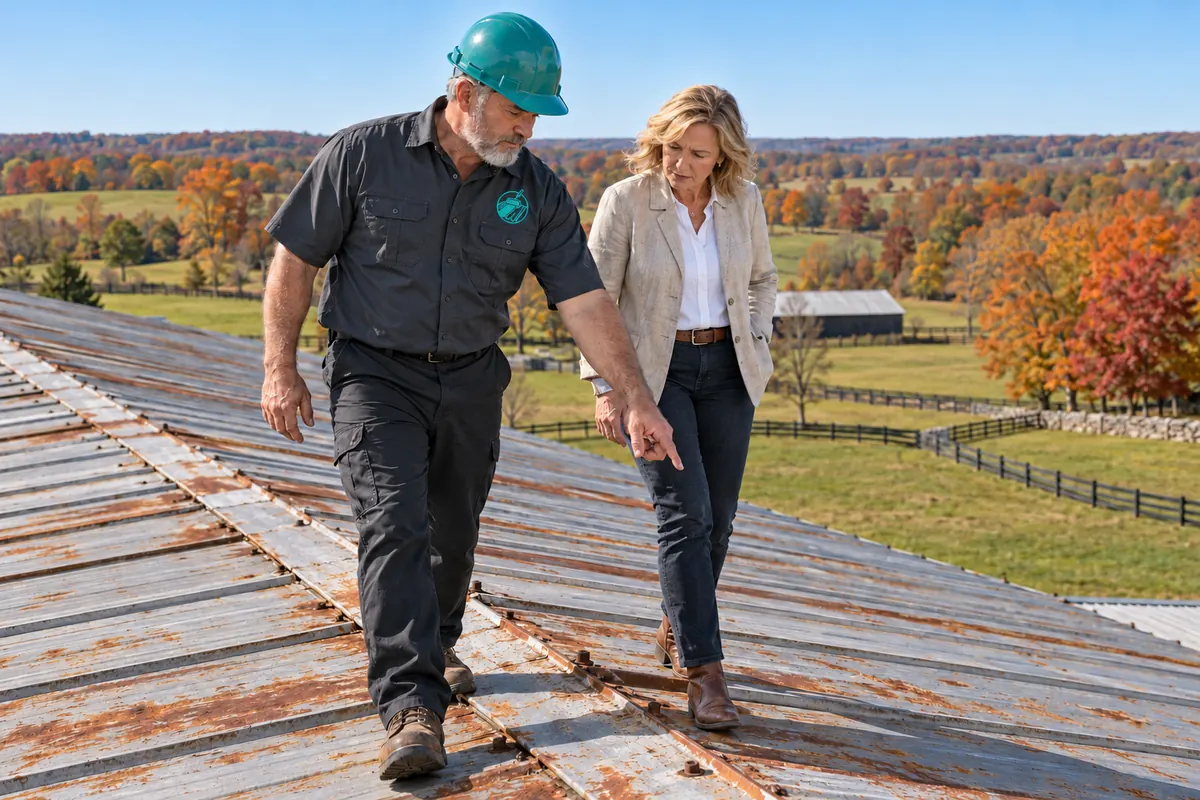
Edges That Stay Down In Wind
Refastened trim and new ridge closures, coated into the panels, give the wind fewer loose edges to work on. The top and perimeter of the roof stop being the first place water gets in during a storm.

Washington County Metal Roofs
Our metal roof coating work in Springfield and Washington County starts at the top and edges: ridge caps, foam closures, and the eave and rake trim wind has lifted.
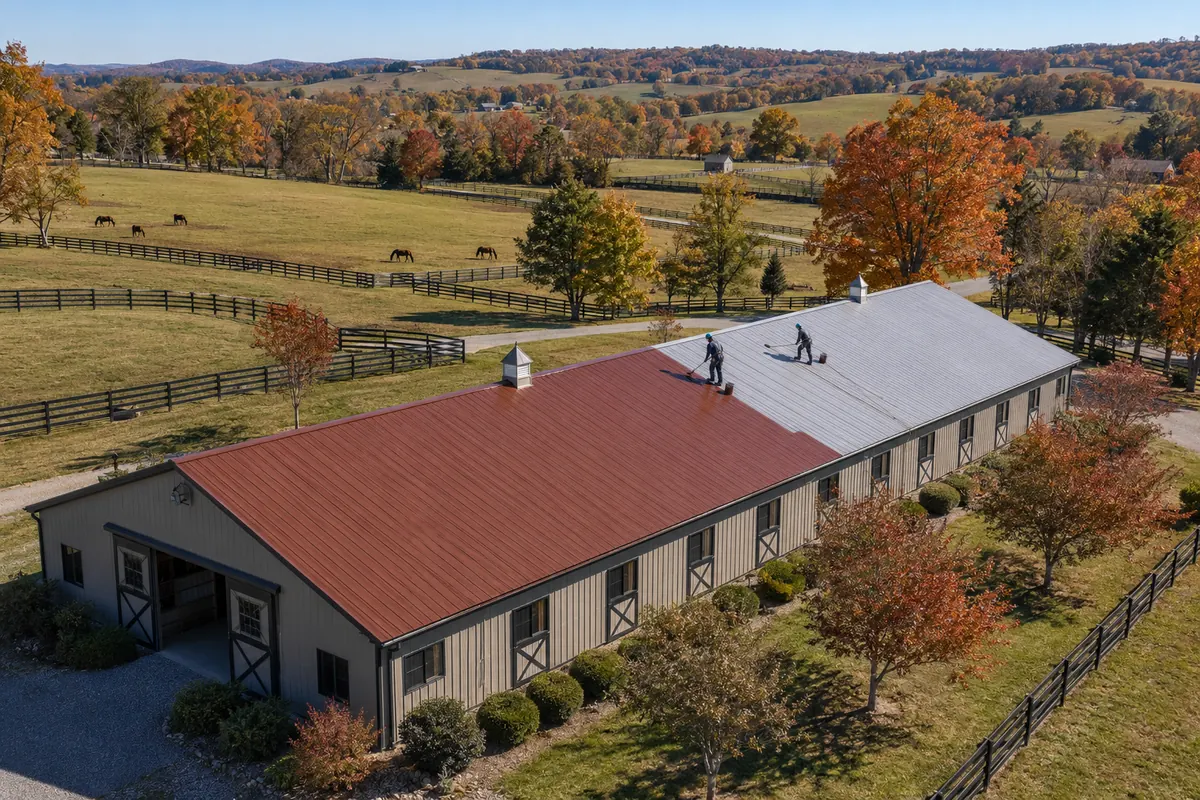
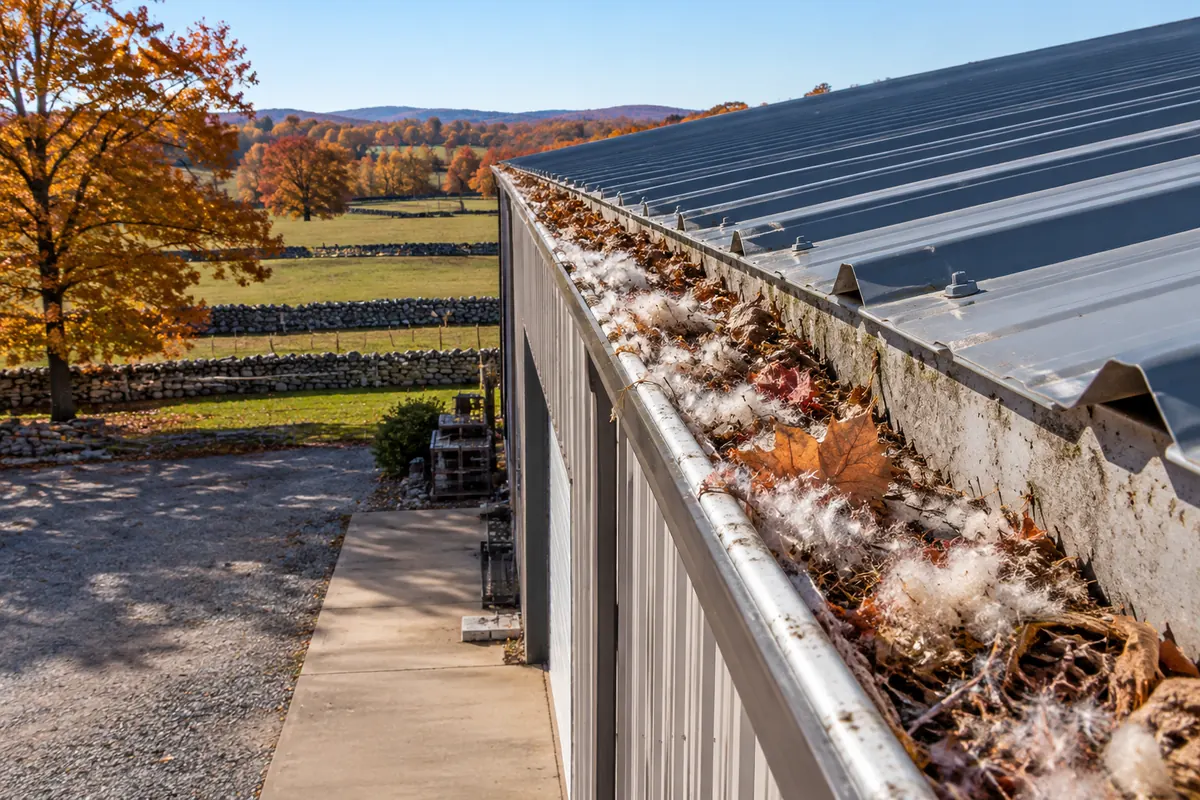
On many Springfield storefront and shop roofs, the field panels hold up fine while the top and edges fail. Ridge caps leak at their closure strips and screws, and wind lifts eave and rake trim until rain blows in behind it.
We fix those parts first. A coating over a loose cap or flapping trim only covers the problem, so the edges get fastened and sealed before the field coat starts.
Edge Work Before The CoatingWhen the field is fine and water still gets in, look at the top and the edges. These rows cover the usual suspects.
Foam closure strips under the ridge cap crumble with age and let blown rain past.
Remove the cap, set new closures, refasten with sealed screws, and coat the joints.
Trim screws back out over the years, and gusts lift the trim off the panel ends.
Refasten the trim with new screws, seal the joints, and coat onto the trim face.
Gutter end caps and seams dry out and split, and debris backs water up under the eave trim.
Clear the trough, reseal seams and end caps, and leave the trough itself uncoated.
Wall flashing pulls away as the panels move, and sealant at the top edge cracks.
Refasten the flashing, seal its top edge, and wrap the joint with fabric and coating.
These gains hold once the caps, closures, and trim are secured and the whole roof shares one coat.
Refastened trim and new ridge closures, coated into the panels, give the wind fewer loose edges to work on. The top and perimeter of the roof stop being the first place water gets in during a storm.
Sealed cap screws and new closures keep water from sitting inside the ridge, where rust used to start unseen.
Resealed gutter seams and end caps carry water to the downspouts instead of dripping at the corners onto walkways.
Straight trim lines and a fresh finish over the ridge look better from the street on downtown buildings.
Edge work comes first on every Springfield job. After that, the roof pitch and its use decide the coating.
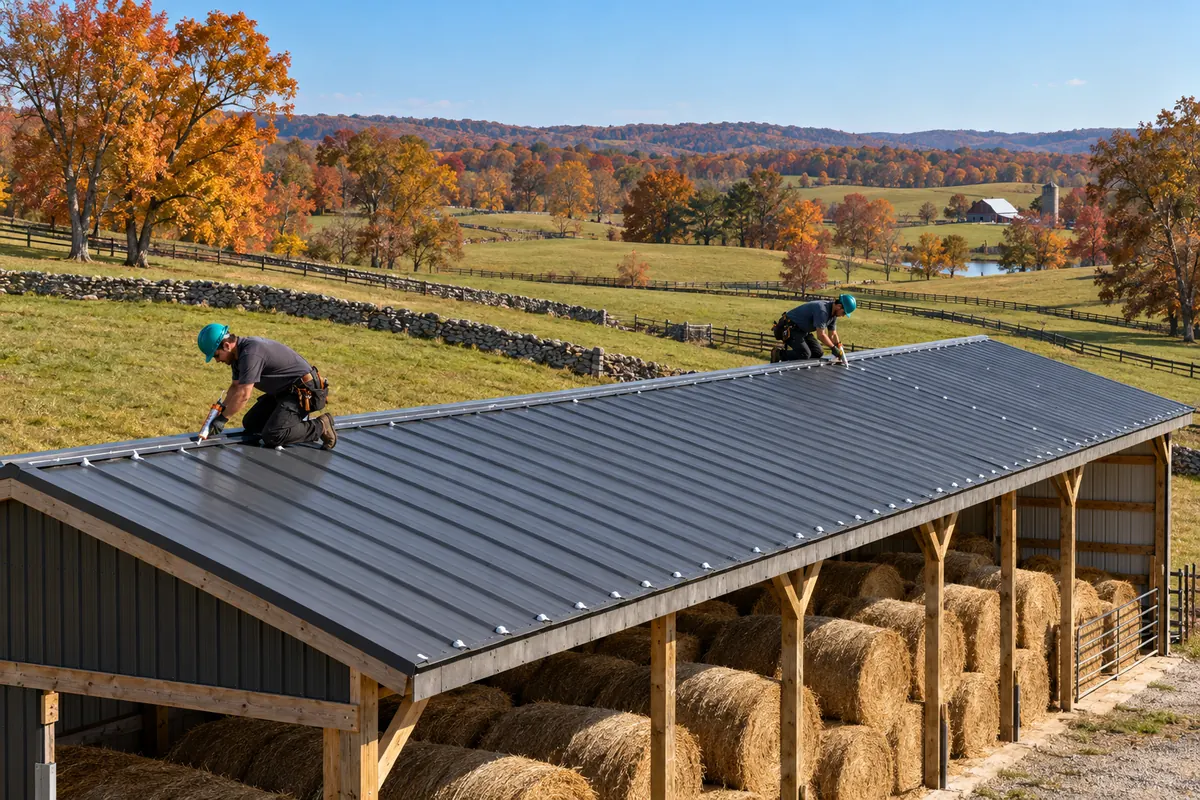
The standard route: caps, closures, and trim fixed, then rust primed and the whole roof coated in two coats.
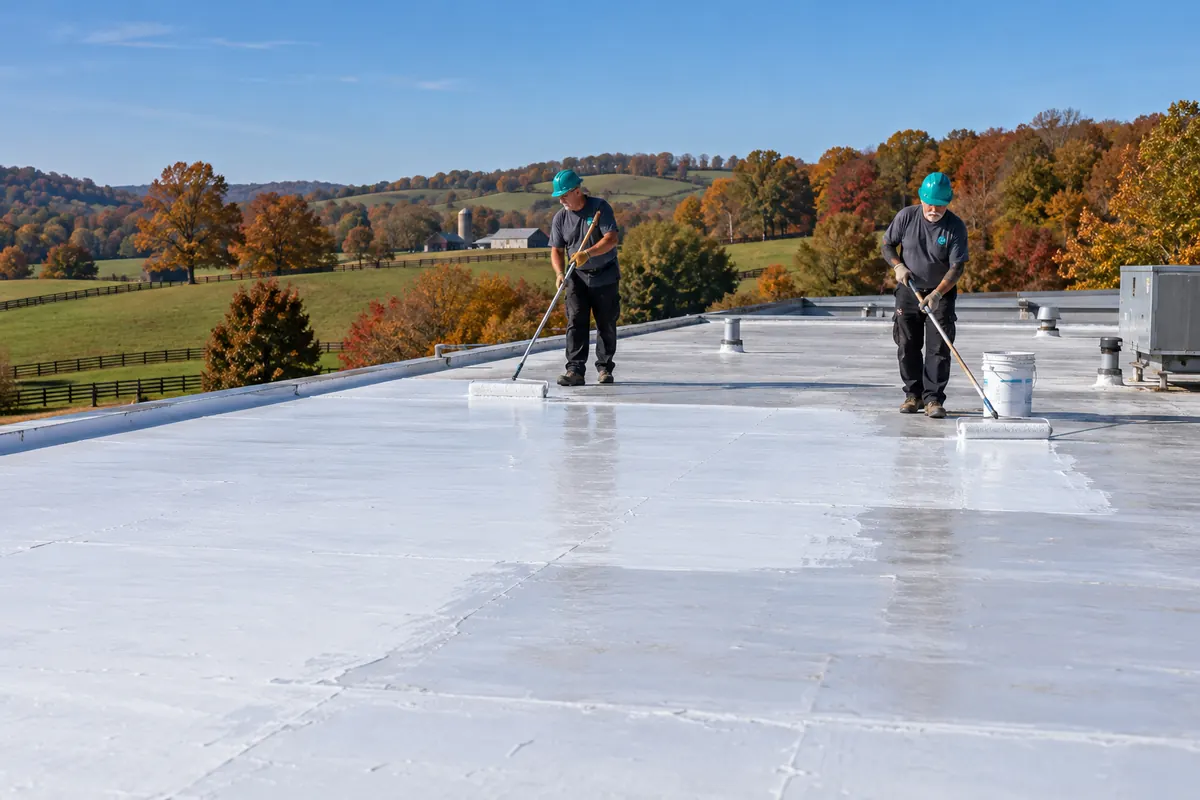
Gable shops on rural lots that drain within hours take acrylic, which stays bright and recoats easily.
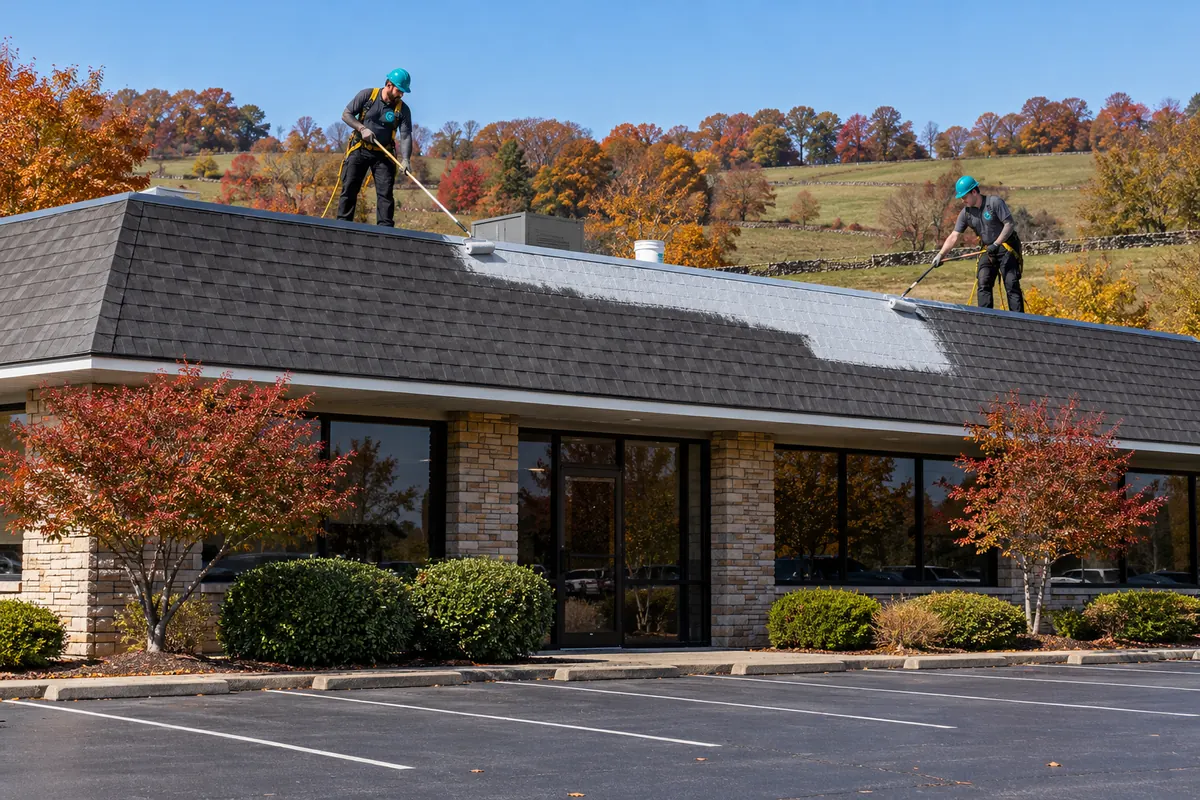
Storefronts with a shingled mansard or front roof get those shingles checked and coated separately from the metal.
Call and describe where the noise or the drip shows up. Loose trim and failing ridge caps are quick to spot on a roof walk.
We work the roof from its top and edges inward. Here is the order on a Springfield metal building.
We start at the ridge, lifting a cap section to check the closures, then walk the eaves and rakes for loose trim and the gutters for split seams.
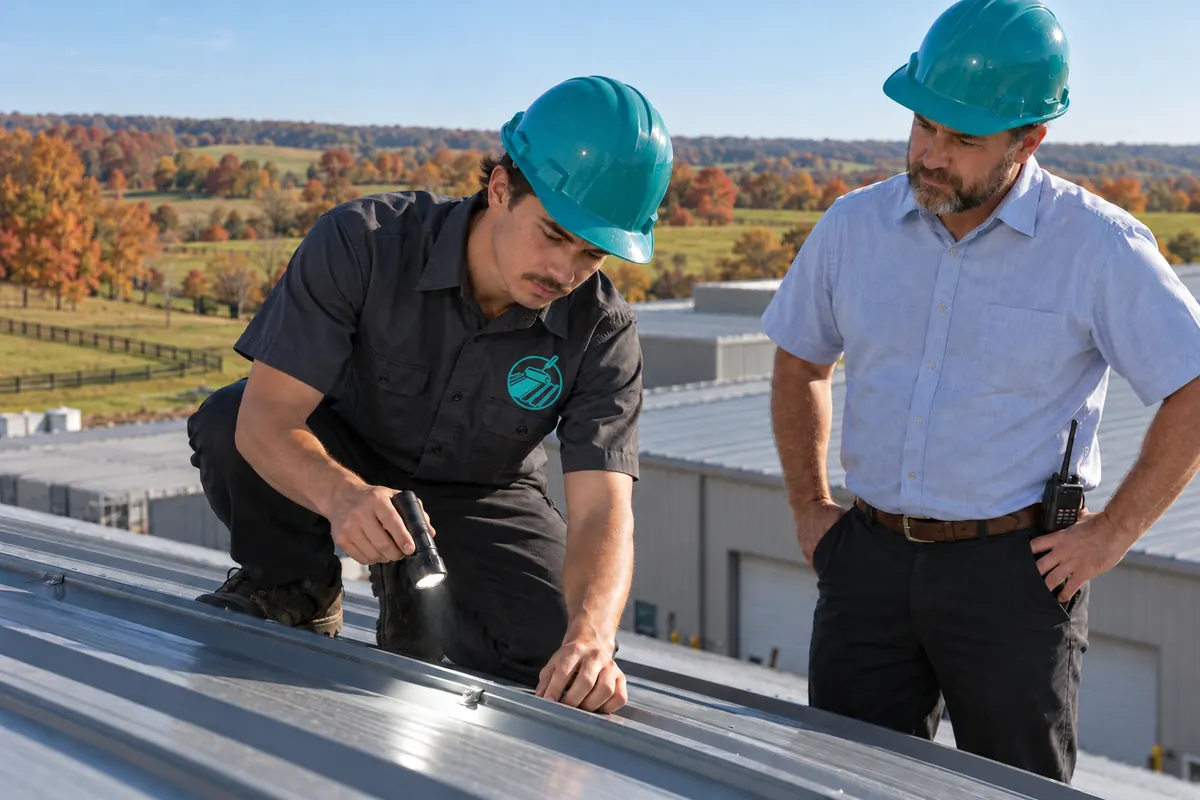
Failed closures are replaced, cap screws are tightened or upsized, and missing screws at the ridge are added where the cap meets the panels.
Eave and rake trim are refastened, wall flashing is pulled tight and sealed, and gutter seams and end caps are resealed.
Panels are washed, loose rust is removed, and primer goes on rusted laps and rib tops before any coating.
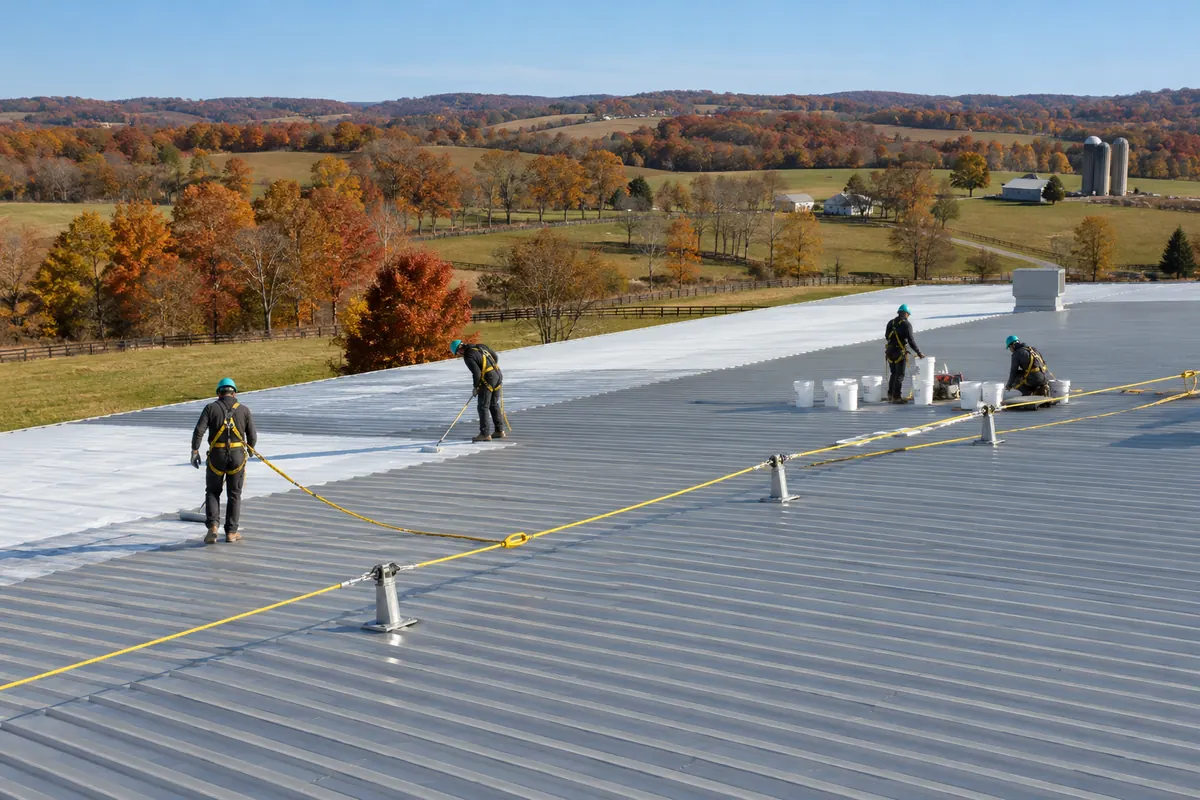
Base and finish coats go on from the ridge down, carried onto cap edges and trim faces so the joints share the film.
Springfield is one of four towns where we coat commercial metal roofs, along with Bardstown, Lebanon, and Taylorsville. Outside those towns? Call us or send us a message to ask.
Each row leads with a short answer. Open it for the full reply.
They get the same cleaning and priming as the field, plus extra sealing where they meet the panels. Failed foam closures under the ridge cap are replaced, cap screws are tightened and sealed, gutter seams and end caps are resealed, and lifted trim is refastened. Gutter troughs stay uncoated unless the gutter leaks, since a rough trough holds leaves.
The state lists the City of Springfield inspector as the local office for Washington County, with no separate county inspector. Roof work outside city limits needs a call to the Kentucky Department of Housing, Buildings and Construction first. Tell the inspector whether panels, foam, gutters, or trim change, since a coating over existing panels changes the least.
Washington County is served in part by Blue Grass Energy, Inter-County Energy, and Salt River Electric, per East Kentucky Power Cooperative. Their offices are in Nicholasville, Danville, and Bardstown. Each serves its own territory regardless of town lines, so pull a bill for each building before asking how a co-op treats foam insulation over steel panels.
When the closures underneath are intact and the cap screws hold, the cap gets cleaned, sealed at its edges, and coated in place. Crumbling closures need the cap lifted, because blown rain will keep coming in under it no matter how much coating goes on top.
Panels and trim expand and contract every day, which slowly backs out screws, and the wind then pries at the loose edge. Refastening with new screws along the full length, sealing the joints, and coating onto the trim face holds it down much better than adding a few screws.
Send the roof size and where the leaks or noise show up, and we will price the job.
Leave a name and number and we will call you back about your metal roof.
Or call now: (502) 289-9569