If Your Roof
Holds Puddles At End Laps A Day After Rain
Shallow R-panel pitch lets water sit at the step, and silicone holds up to that standing water.
Start WithSilicone Roof Coating
Low-Slope Metal And Flat Roofs
Silicone roof coating for shallow-pitch metal and low-slope commercial roofs in Bardstown, where water lingers at end laps, gutters, and behind rooftop units after rain.
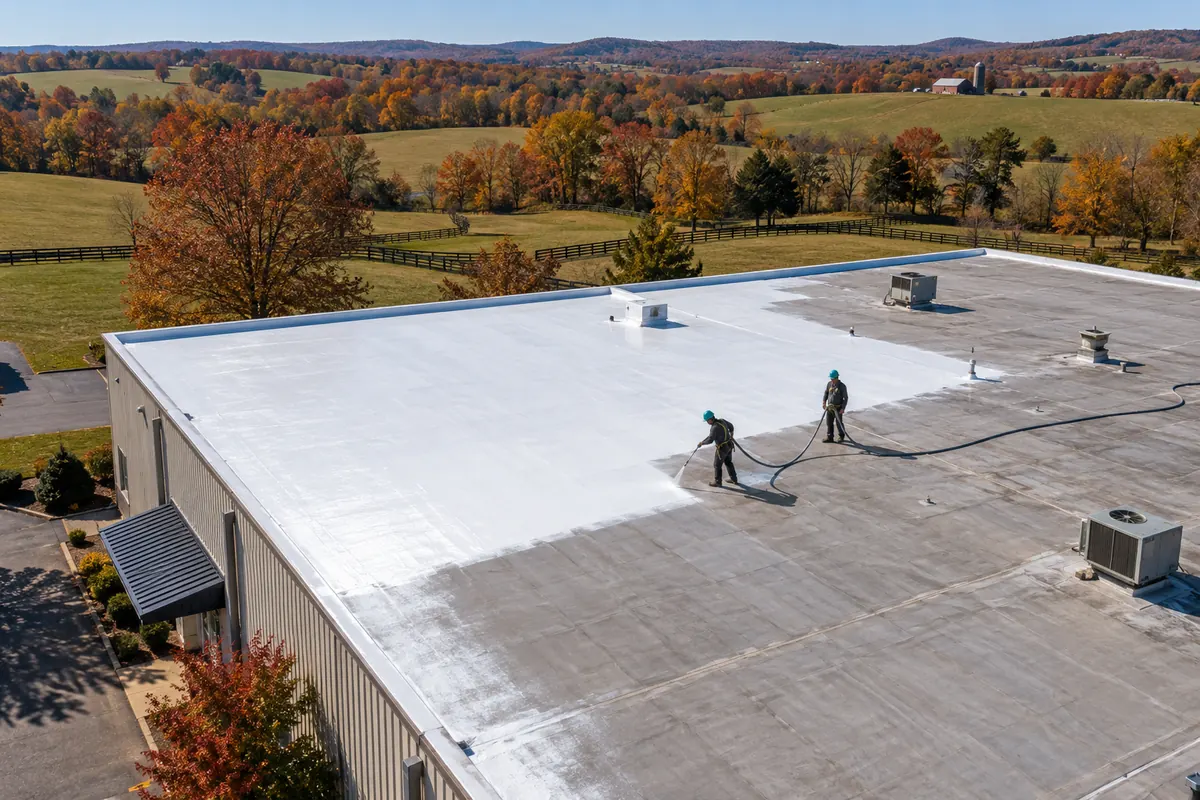
Silicone earns its place where water sits for a while. Use these cards to see whether your roof is one of those.
Shallow R-panel pitch lets water sit at the step, and silicone holds up to that standing water.
The curb blocks flow on its uphill side, so that pocket gets detailed with fabric and extra film.
Fast-draining metal stays brighter and cleaner under water-based acrylic, which also recoats with more products.
Trapped water under the surface spoils adhesion, so wet material comes out before any coating.
Low pitch changes where a metal roof fails. These are the conditions that point a building toward silicone.
Slight panel sag or a flat pitch leaves water standing for a day or more after a storm.
Seal the laps in that zone first, then build extra silicone film across the low area.
Water backs up on the uphill side of the curb and works into the curb flashing and nearby screws.
Wrap the curb flashing with fabric and coating, and seal every screw within reach of the pocket.
Shallow roofs push water slowly into gutters, so seams and end caps stay wet and fail early.
Reseal gutter seams and end caps, clear debris, and carry silicone onto the panel ends.
Standing water and sun dry out neoprene washers faster than on a steeper roof.
Replace stripped screws one size up, cap each head, and coat over the fastener rows.
Silicone comes in a few forms. Roof size, how much water sits, and the traffic around equipment decide which one fits.
Thick films build in fewer passes, which saves days on large distribution and storage roofs where crews cover a lot of square footage.
Service paths to rooftop units get embedded granules or pads, because wet silicone turns slick under a technician's boots.
Polyester fabric set in base coat bridges end laps and curb corners, where standing water and movement meet.
Silicone pays off on roofs that stay wet longer than others. These gains hold when the laps and screws are fixed first.
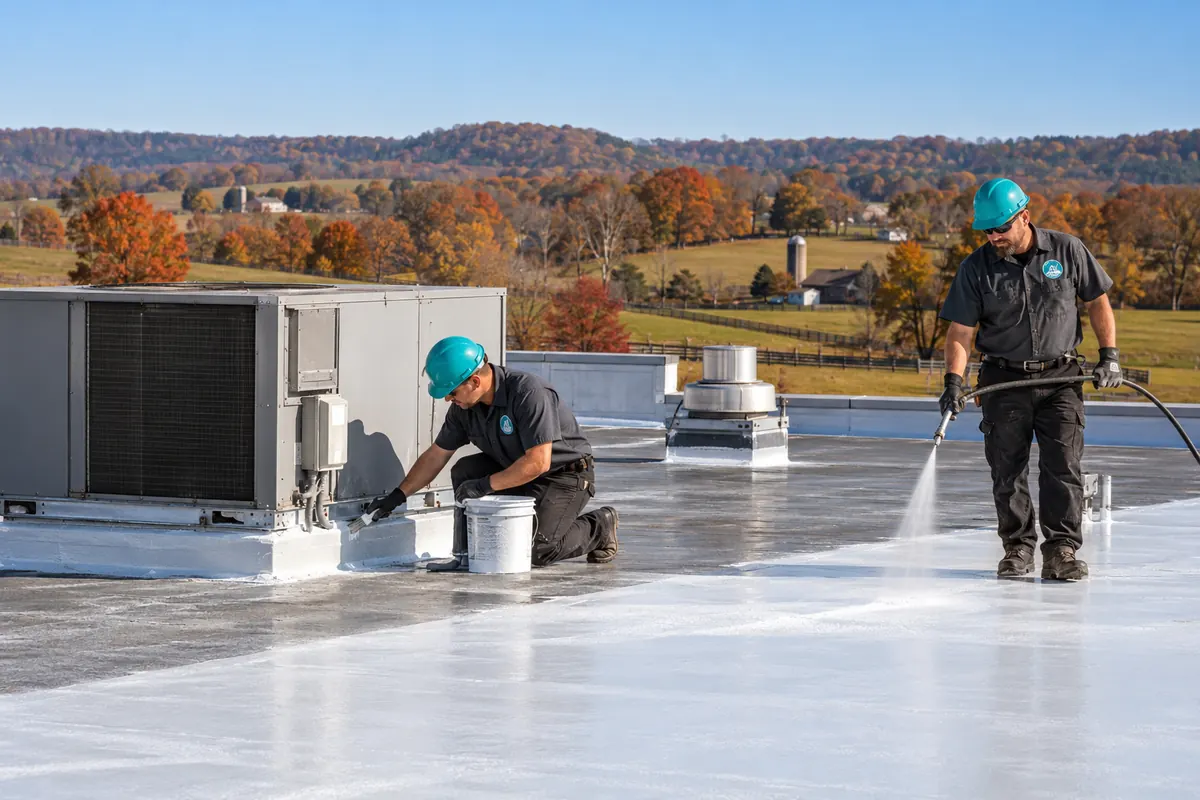
Silicone resists breakdown from standing water and sun better than water-based acrylics. On a shallow R-panel roof, that means the low end laps and the pocket behind a rooftop unit keep their film long after a storm passes.
Silicone weathers well under summer sun, so the white finish over your panels keeps its film at the ridge and the eaves.
High-solids products build thickness in fewer passes, which helps on broad warehouse and storage roofs with long panel runs.
Years later, a clean silicone roof takes another coat of silicone directly, with no tear-off of the first layer.
Call while the puddles are there. Tell us where they sit, near a gutter, a curb, or an end lap, and we can plan the walk around them.
Silicone bonds mainly to itself, so the prep has to be right the first time. This is the order on a low-slope roof.
We mark where water sits after rain, probe the panels around each puddle, and check the screws, laps, and curbs in those zones. Inside, wet insulation under a low spot gets noted.
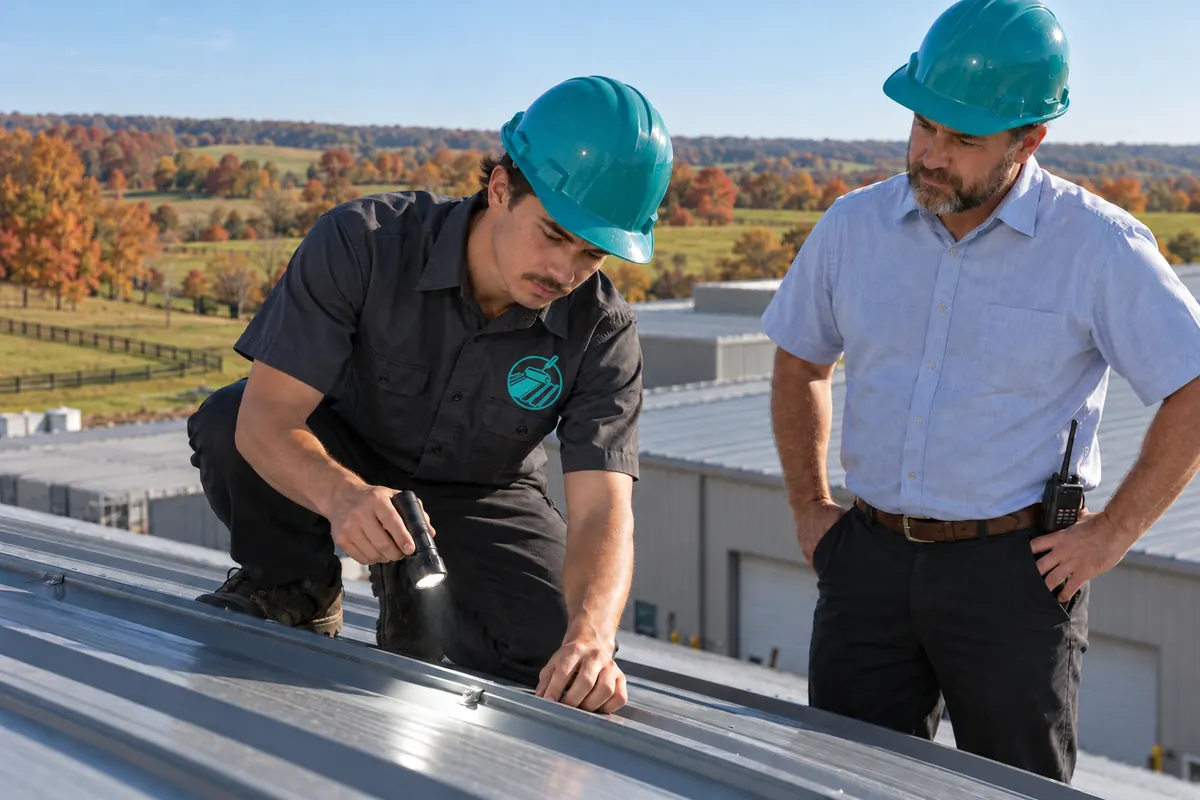
Each exposed screw is tightened without crushing the washer, or replaced one size up when stripped. Every head gets fastener sealant or butyl before primer goes on.
Pressure washing removes chalk and grit, and the primer named by the silicone maker goes on rusted laps and any panels that need it, once the steel is dry.
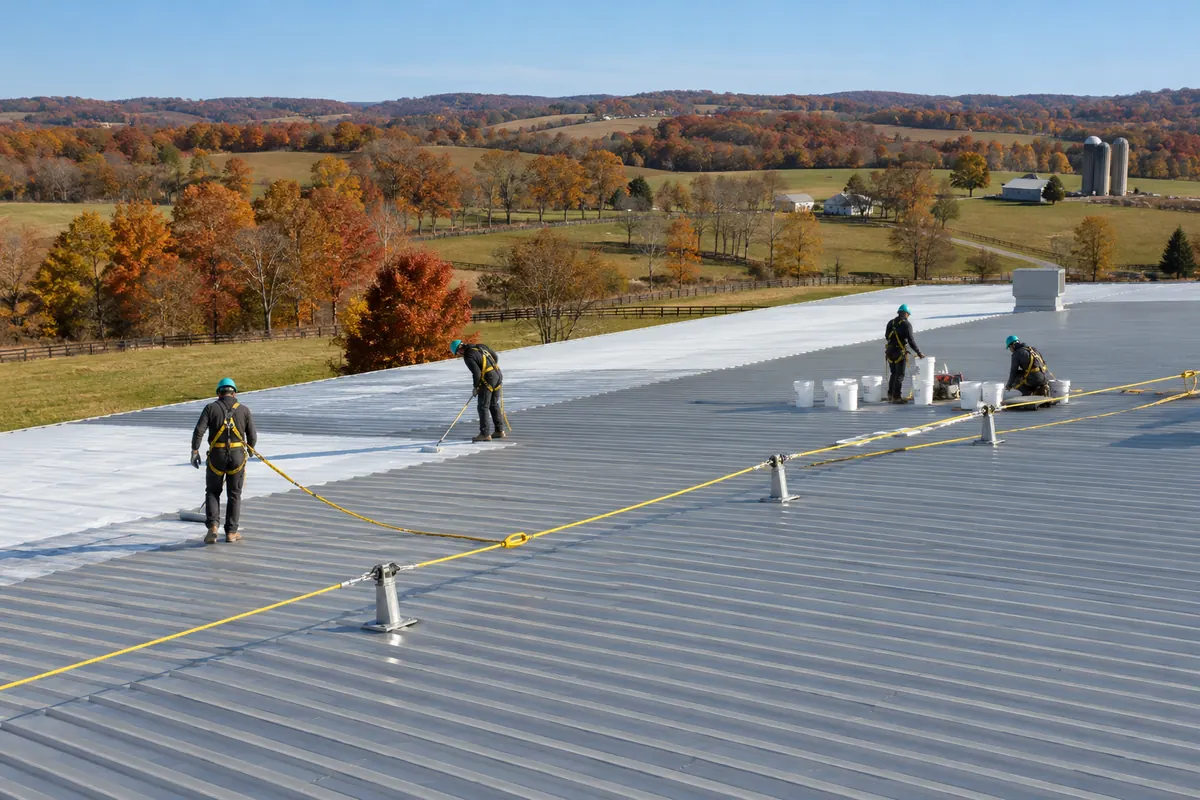
Fabric set in base coat runs across end laps, curb corners, and pipe boots, where water sits longest and the panels move most.
The field coat goes on at the thickness on the product sheet, starting after the dew burns off, with walkway granules added on paths to rooftop units.
Silicone is one answer among several. These services fit roofs that drain faster or have shingles.
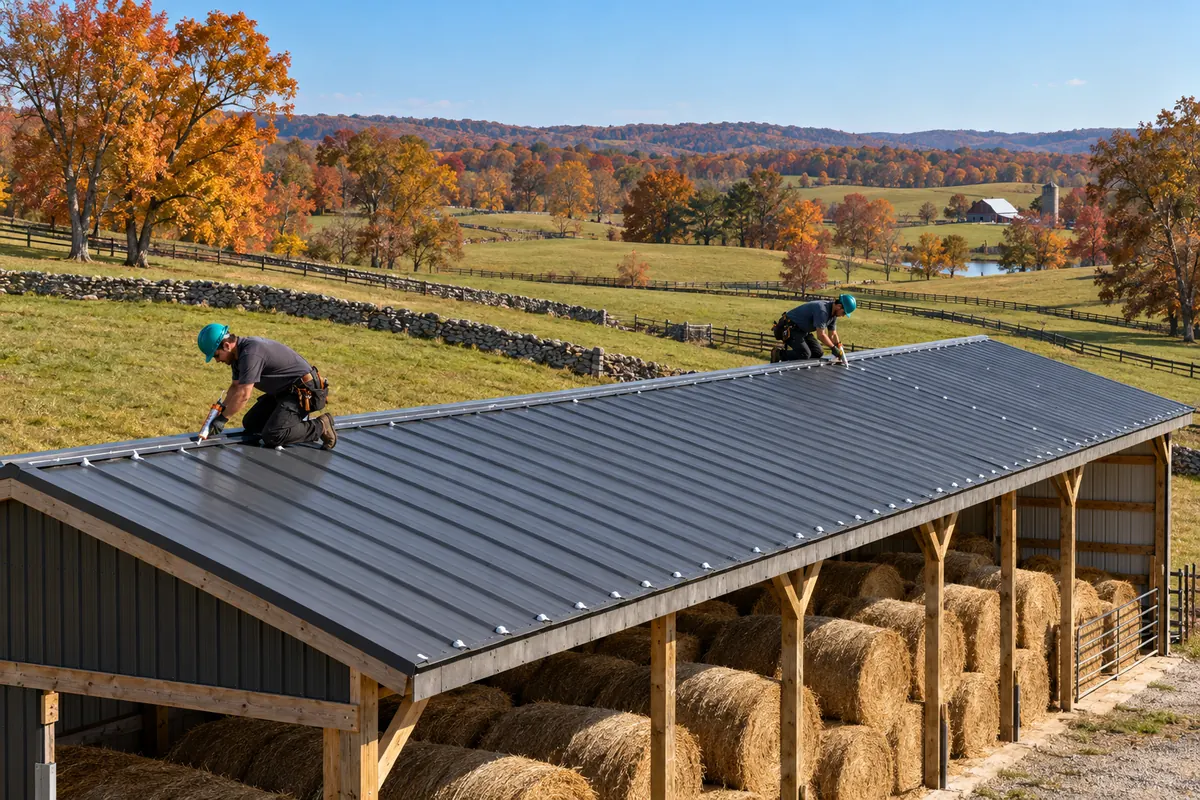
Our core service covers rust, screws, and laps on any solid metal roof before the finish coat is chosen.
Metal roof coating in Bardstown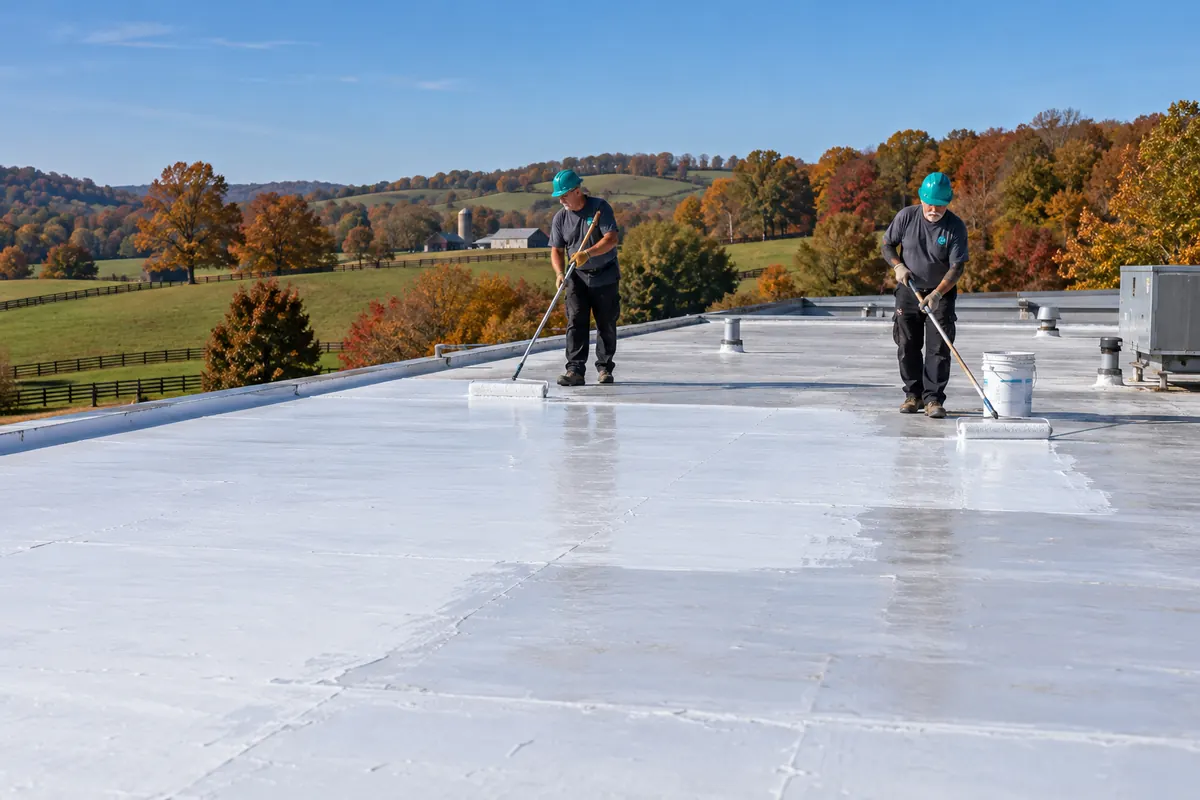
Pitched metal that sheds water in hours suits acrylic, which picks up less dust than silicone.
Acrylic coating details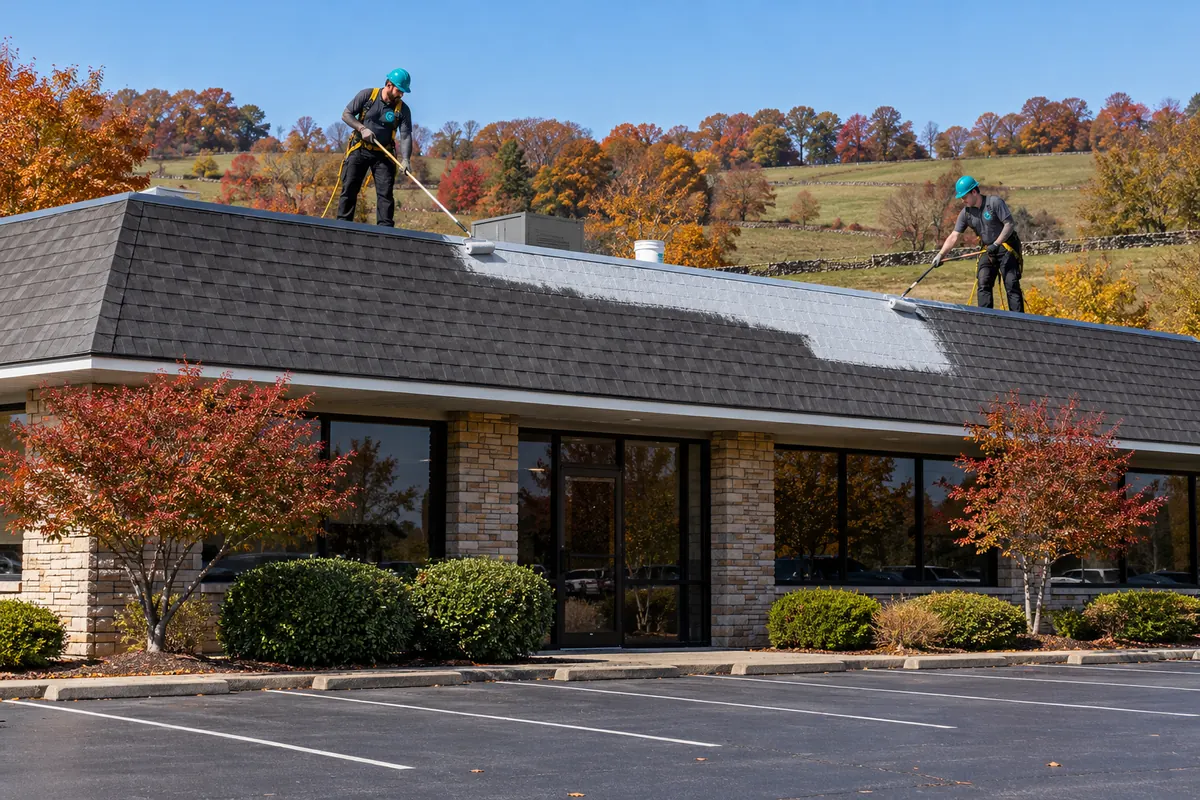
Shingled offices and churches beside your metal buildings get their own narrow inspection gate.
Shingle coating detailsEach row starts with the short answer. Open a row to read more.
Every exposed screw gets checked, because a failed washer is the most common leak on an R-panel roof. Loose screws are tightened without crushing the washer, stripped or rusted ones go up a size, and each head gets fastener sealant or butyl. Missing screws at end laps and ridge caps are added, since those spots pull apart first in wind.
Silicone fits low-slope metal roofs where water stays at end laps, gutters, or behind rooftop units. It handles standing water and sun better than water-based acrylic. Weigh three trade-offs: dust and pollen dull a white finish, later recoats need silicone, and walkways need granules or pads because wet silicone is slick.
Dry panels, temperatures inside the product range, low wind, and a clear forecast through the cure. Metal collects dew quickly on Kentucky mornings, and coating over that film fails to grip, so crews check the surface temperature against the dew point before starting. On hot afternoons, work follows the shade so dark panels do not skin the coating.
Often it can, once the old acrylic is cleaned and a test patch shows the silicone grips it. Peeling or chalky acrylic comes off first in those areas. The reverse direction is harder: few coatings bond to silicone, so a roof coated in silicone stays on silicone for future recoats.
Wet silicone is slick, so we add granules broadcast into the top coat or walkway pads along the paths technicians use to reach rooftop units. Mark those paths before the job and tell service contractors where they run. Keeping traffic on them also protects the film from boot wear.
Share the roof size and where water sits after rain, and we will price silicone for that roof.
Leave a name and number and we will call you back about your metal roof.
Or call now: (502) 289-9569