If Your Roof
Has Firm Panels And Leaks At The Screw Rows
Washers have dried out but the steel holds, so fastener work and a full coat stop the drips.
Start WithMetal Roof Coating
R-Panel And Standing Seam Roofs
Commercial metal roof coating for Bardstown warehouses, shops, and equipment buildings. We treat the rust, fix every exposed screw, seal the laps, then coat the panels.
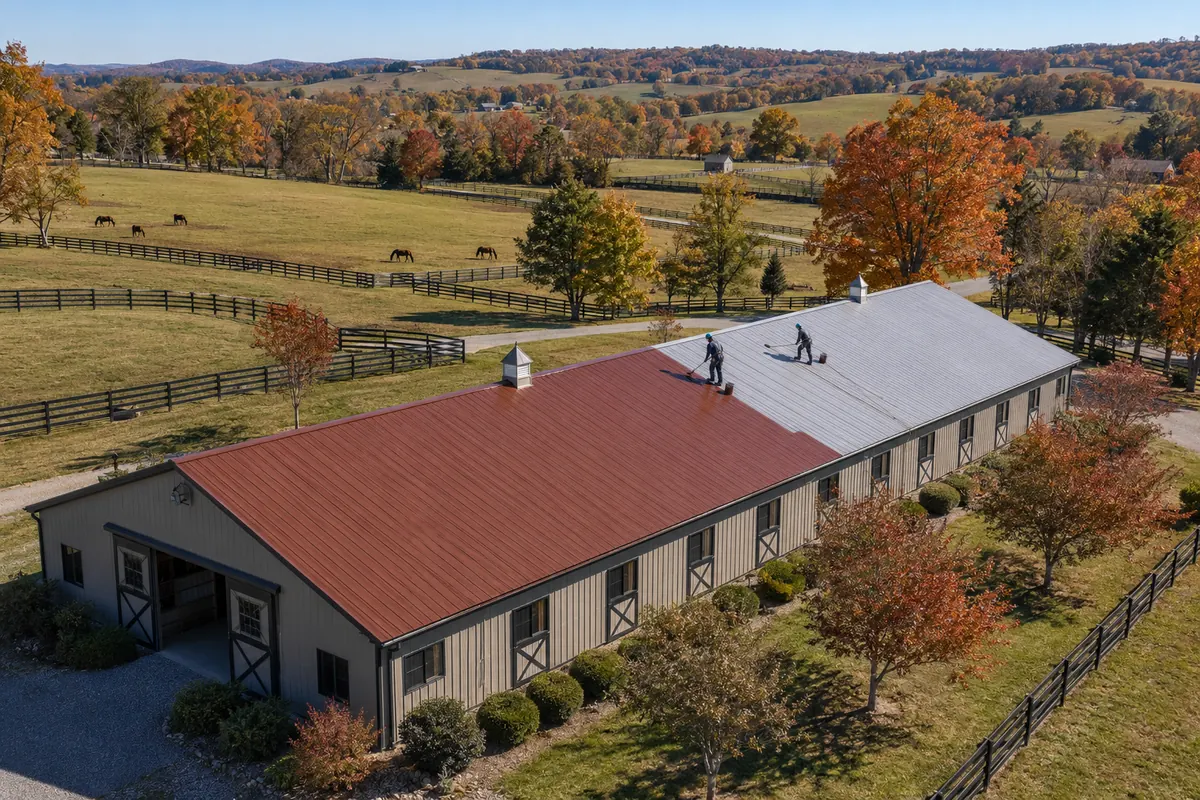
A metal roof coating works over steel that is still solid. These four situations cover most of the commercial metal roofs we walk around Nelson County.
Washers have dried out but the steel holds, so fastener work and a full coat stop the drips.
Hidden clips stay put while seams and end splices get sealed, after the panel brand is checked.
Those sheets are cut out and matched with new panels, and the field is then primed and coated.
A coating adds no strength, so structural repair or a new roof comes before anything else.
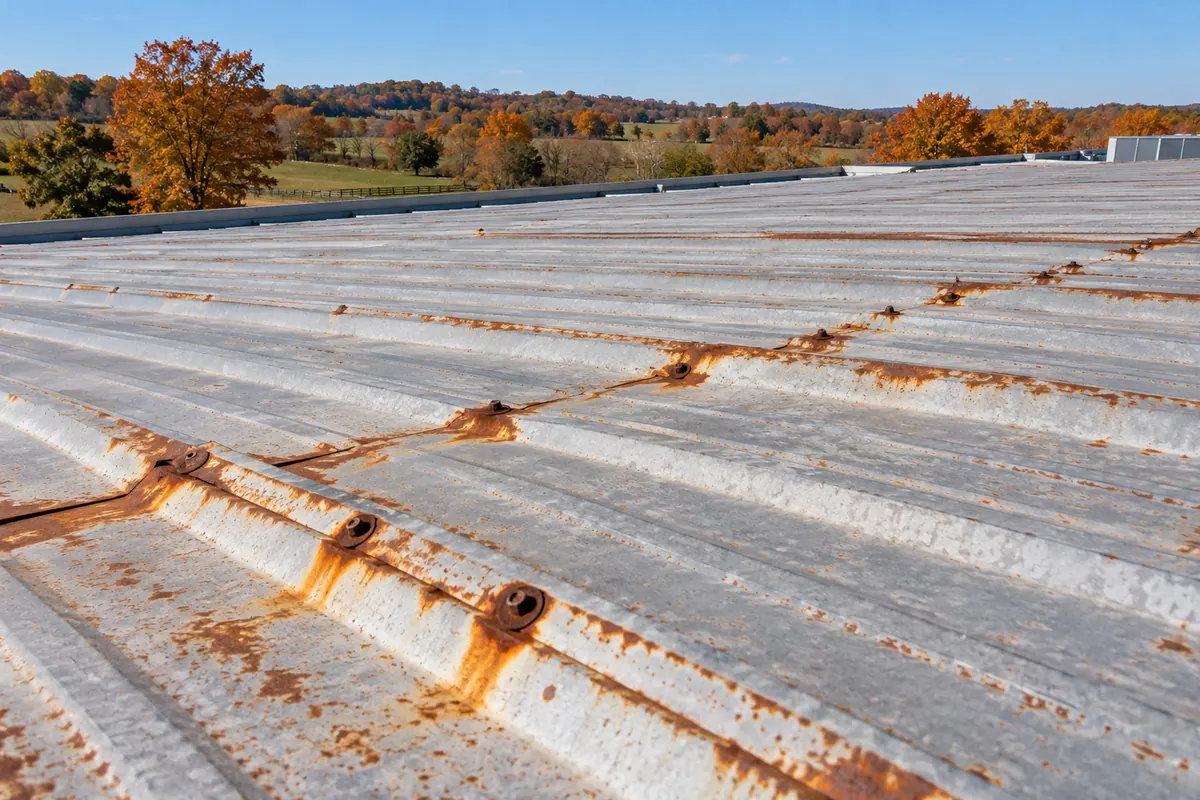
Exposed-fastener R-panel roofs leak at the parts that pierce or overlap the sheet. These rows show the usual trail from stain to cause.
Wallowed screw holes let the sheet move, so the washer never seals no matter how tight the screw gets.
Remove the screw, upsize to the next diameter, cap the head, then prime and coat.
Debris collects at the step where the upper panel overlaps the lower one, and the tape inside dries out.
Clean out the lap, seal it across the full panel width, and reinforce it with fabric.
White rust forms on galvanized or Galvalume coatings that stay damp, and paint sheds as chalk with age.
Wash with a maker-approved cleaner, then apply the primer listed for that surface.
Trim screws back out and wind lifts the edge, which opens a path for rain behind the panel ends.
Refasten the rake and eave trim, seal the joints, and carry coating onto the trim face.
Several systems go over primed steel. The choice depends on how fast the roof drains, how much foot traffic it sees, and what you want at the next recoat.
Gable roofs and steady pitches drain within hours, which suits water-based acrylic. It stays bright and accepts many coatings at the next recoat.
Shallow R-panel roofs that hold water at end laps or behind rooftop units take silicone, which handles standing water better than acrylic.
Closed-cell foam over the ribs adds insulation and buries screws and laps in one layer. It raises the roof edge, so trim gets reworked.
These are qualified gains. Each holds only when the rust, screws, and laps are handled before the coating goes on.
Coating a roof with firm panels costs less than tearing off steel that still has years of use in it. The screws, laps, and rust spots get fixed, and the panels you already own stay in place under one waterproof film.
Primer plus coating keeps dew and rain off the hidden steel inside panel overlaps, where rust starts first on R-panel roofs.
Crews work from the roof surface, so shelving, equipment, and stock inside stay where they are while the coats go on.
When the top coat wears thin years later, a cleaned roof takes a fresh coat of the same family over the existing film.
Send photos of the end laps and screw rows when you call. Rust that stays on the surface is usually ready for primer and coating.
Exposed-fastener roofs need far more detail work than standing seam roofs. This is the order we follow on each of them.
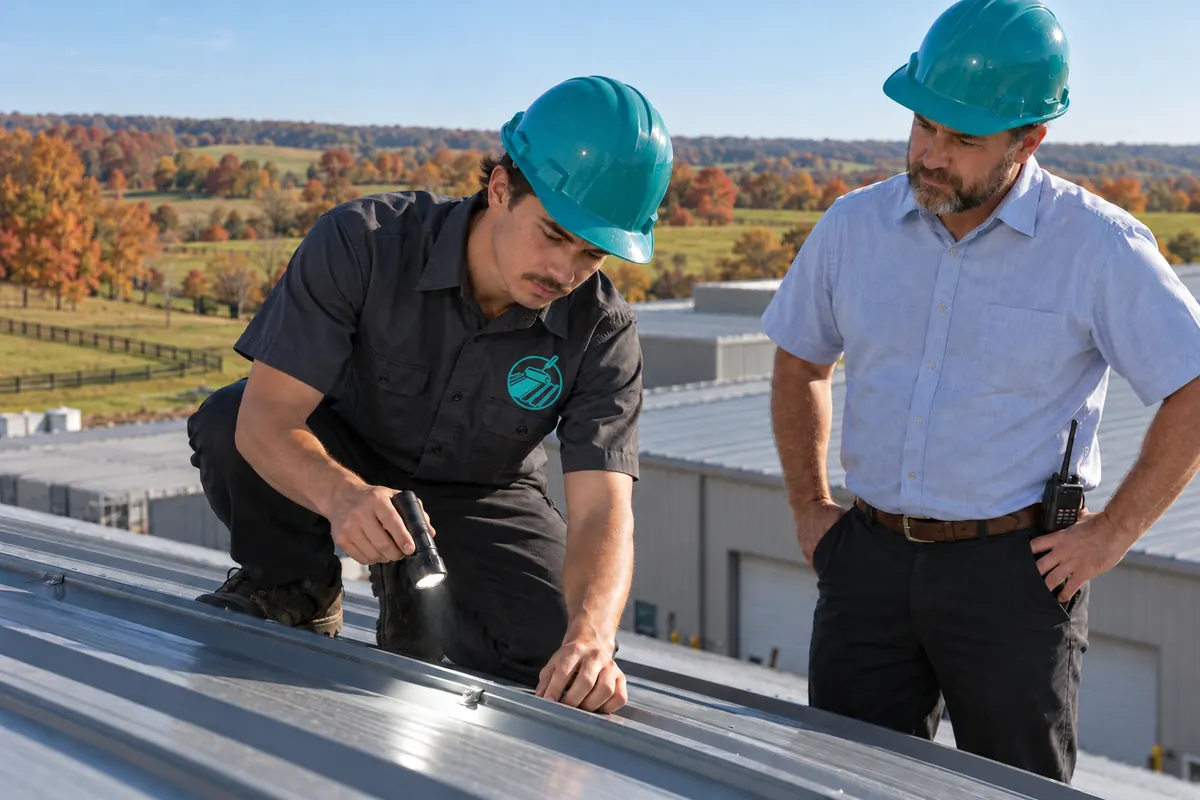
We walk the panels between purlins, check every screw row and lap, and read the panel brand on standing seam roofs. From inside, stained purlins and wet insulation show where water has been landing.
Surface bloom, red rust at laps, white rust on Galvalume, and rust-through holes each get marked on a roof sketch. Holes get patched or the sheet gets swapped before prep moves on.
Panels are pressure washed, loose scale comes off with wire brushes, and the primer listed by the coating maker goes on every rusted area and any surface that calls for it.
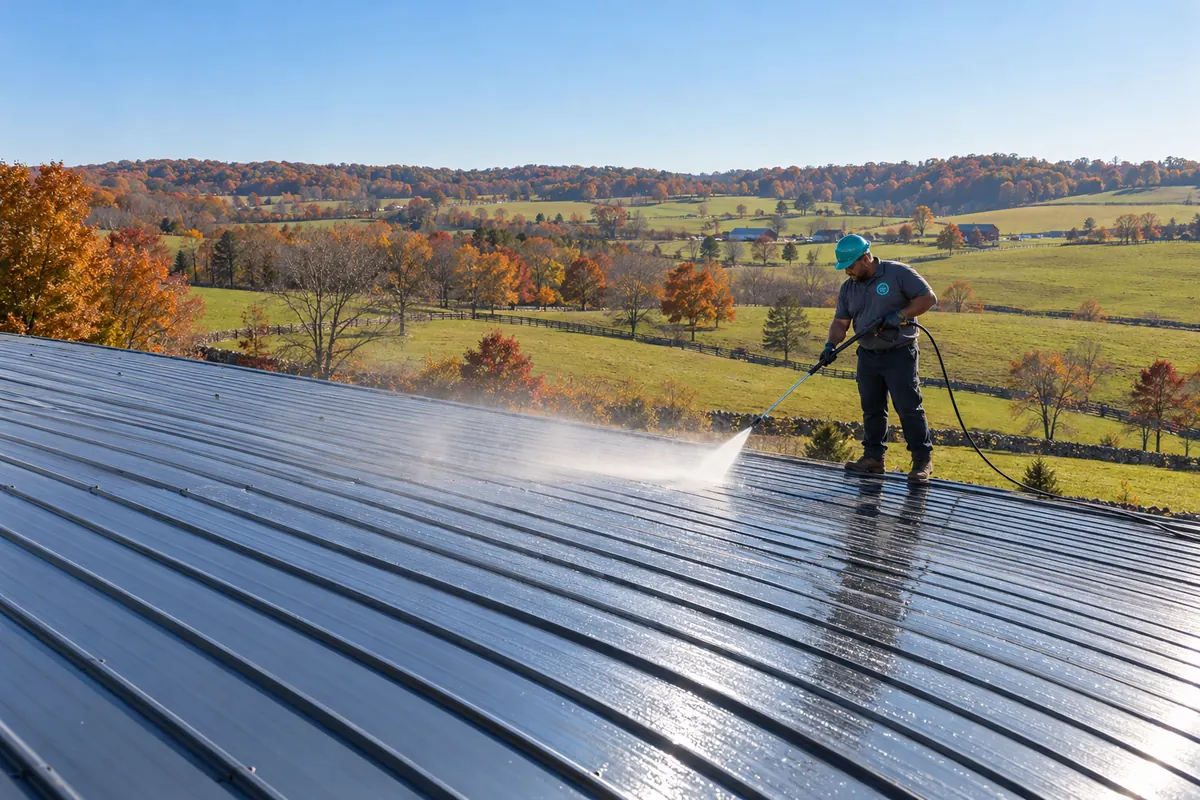
Screws are tightened, upsized, or added at end laps and ridge caps. Laps get mastic or seam tape with fabric, and lifted trim is refastened before the base coat.
Two coats go on at the film thickness the product sheet calls for, with the finish coat in white or a light color unless the building calls for another.
Some metal roofs need a different finish or added insulation. These services cover those cases.
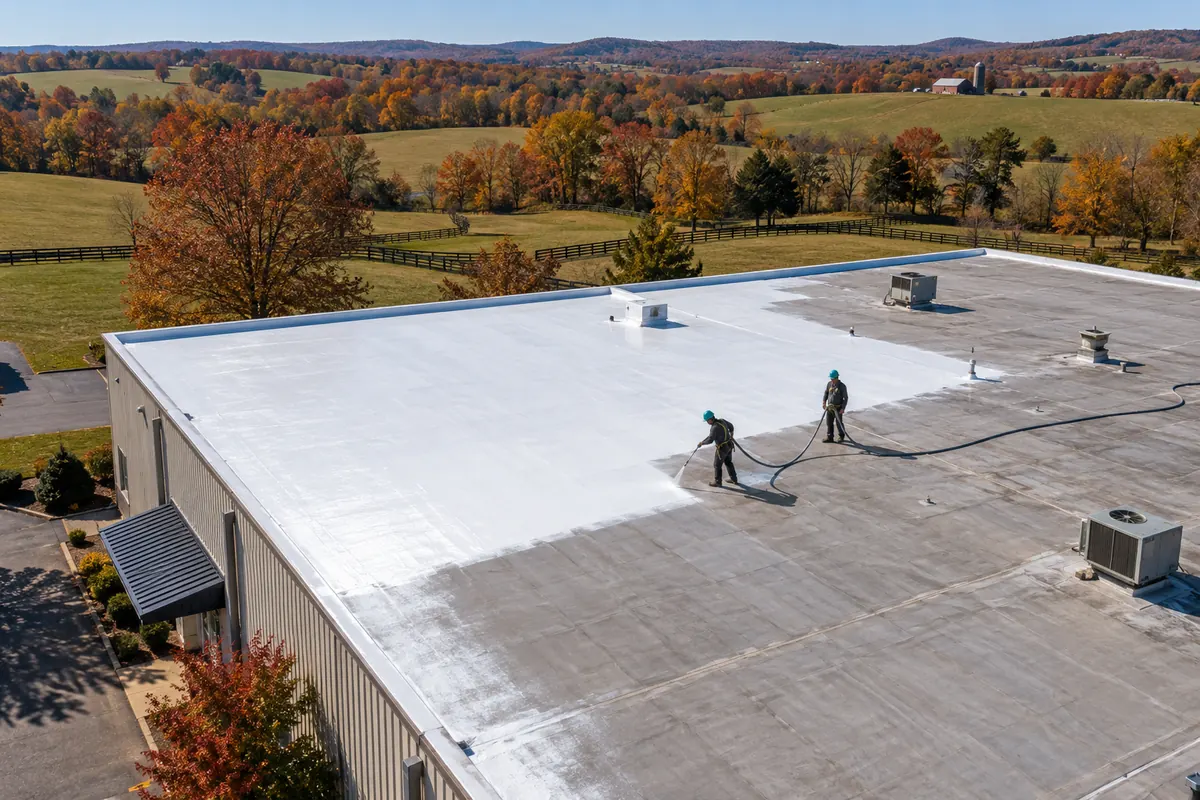
Shallow metal roofs that hold water behind rooftop units or at gutters take silicone for its resistance to standing water.
Silicone coating details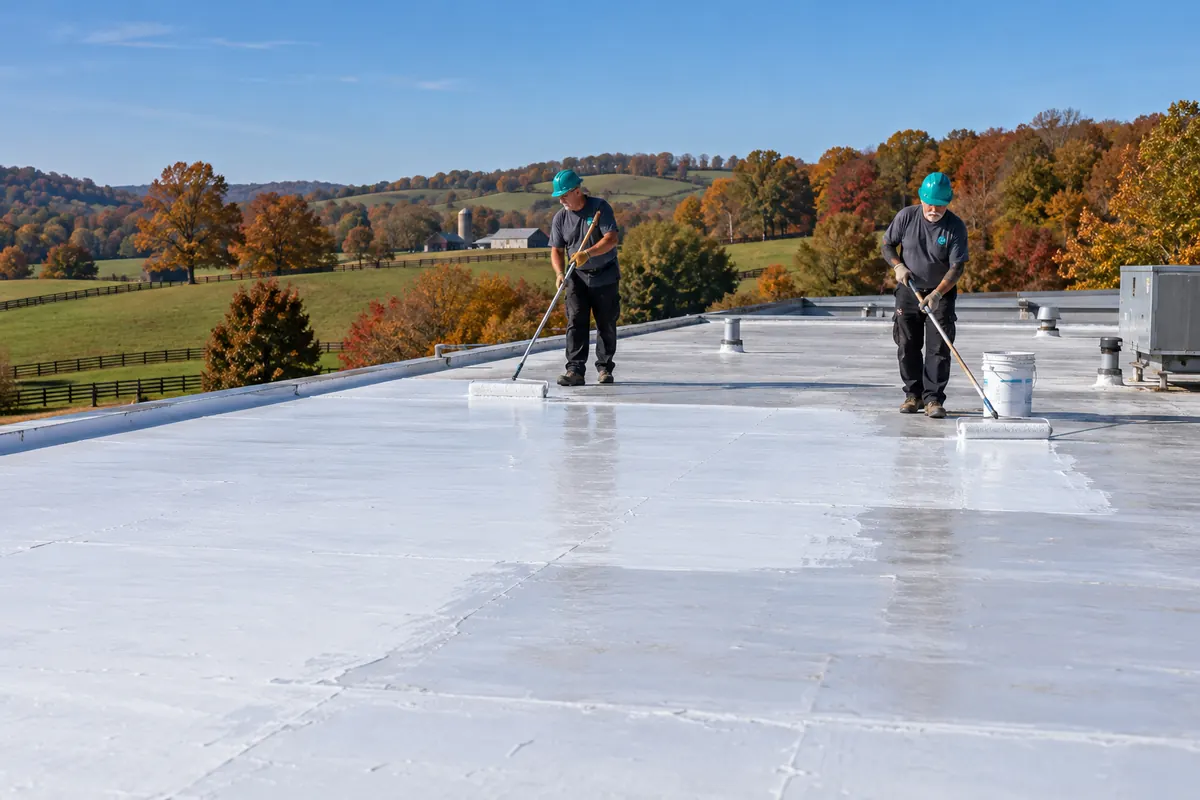
Steeper metal roofs that shed rain quickly suit acrylic, which stays bright and recoats easily.
Acrylic coating details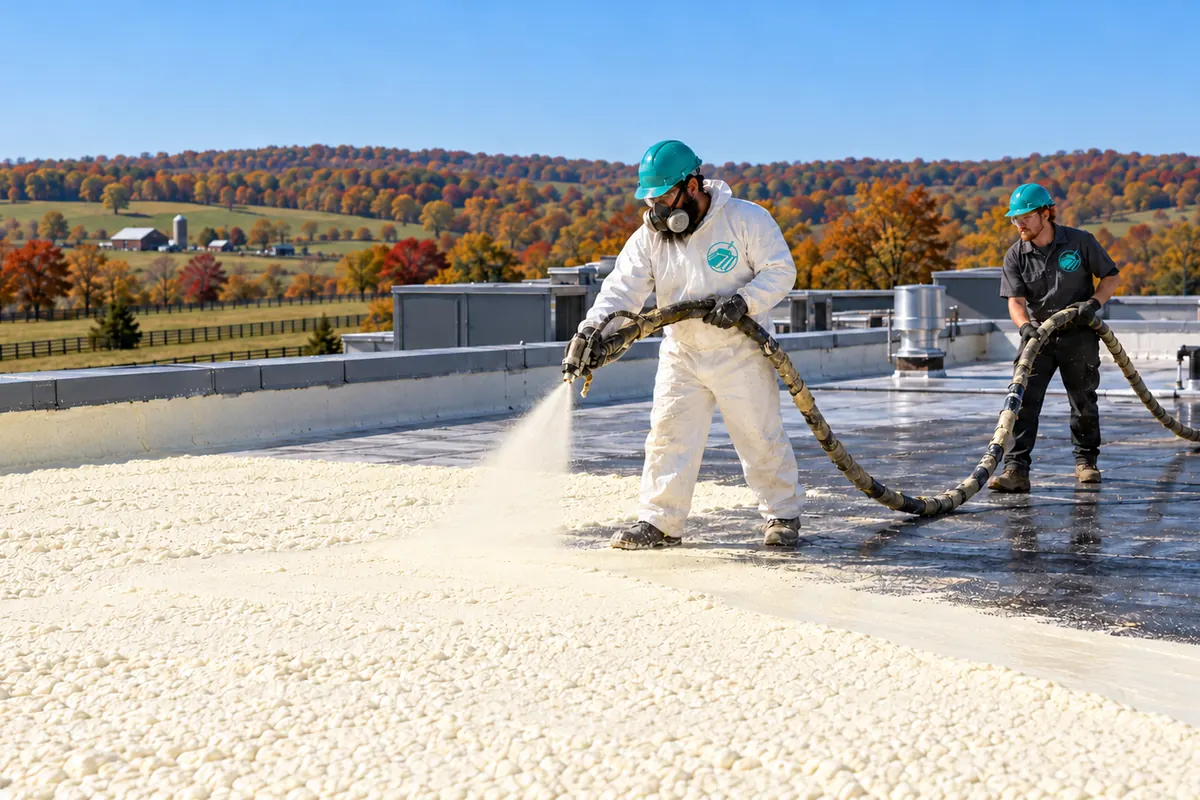
Buildings that drip on cold mornings or cost a lot to heat get foam over the panels for insulation.
Spray foam over metalShort answers sit on each row. Open one for the detail.
Roofs with stiff panels, rust limited to surface bloom, and leaks that trace to screws, laps, or ridge caps make the strongest candidates. That covers many warehouses, shop buildings, church fellowship halls, farm equipment buildings, and metal-roofed retail strips. Widespread rust-through, crushed ribs, or framing that sags between purlins means those areas get new panels before coating.
On an exposed-fastener R-panel roof every screw passes through the sheet, so fastener rows take most of the prep time. Standing seam panels hide their clips under the seam, so the work centers on seams, end splices, and trim screws. Standing seam panels also move more on their clips, and some manufacturers limit what goes on them.
Surface rust is cleaned and primed with a rust-inhibiting primer, and that pairing is the most common metal roof restoration. Flaking scale comes off with wire brushes or grinders, while tight rust gets cleaned and treated so primer grips it. Holes where the steel is gone get a patch or a new panel section first.
Call Nelson County Code Enforcement before work starts, since the state building department lists that office as the local inspector. Coating, foam, and panel replacement are treated differently, and foam or new panels change the roof assembly. Have the address, roof area, panel type, and planned work ready. Historic district buildings also go to the Historic Review Board.
Plan one walk in spring and one in fall, plus a look after any hailstorm or high wind. Check the end laps, ridge caps, and screw rows first, since those are the spots that opened up before the coating. Dated photos from each walk make it easy to spot a thin area spreading between visits.
Tell us the roof size and panel type, and we will start with an inspection of the screws and laps.
Leave a name and number and we will call you back about your metal roof.
Or call now: (502) 289-9569