If Your Roof
Drips Inside On Clear, Cold Mornings
Condensation forms under bare panels, and foam on top keeps the steel warmer so less water forms below.
Start WithSpray Foam Roofing

Foam Over Metal Panels
Spray foam roofing in Bardstown adds closed-cell insulation over metal panels and seals screws, laps, and ridge caps in one layer, finished with a protective top coat.
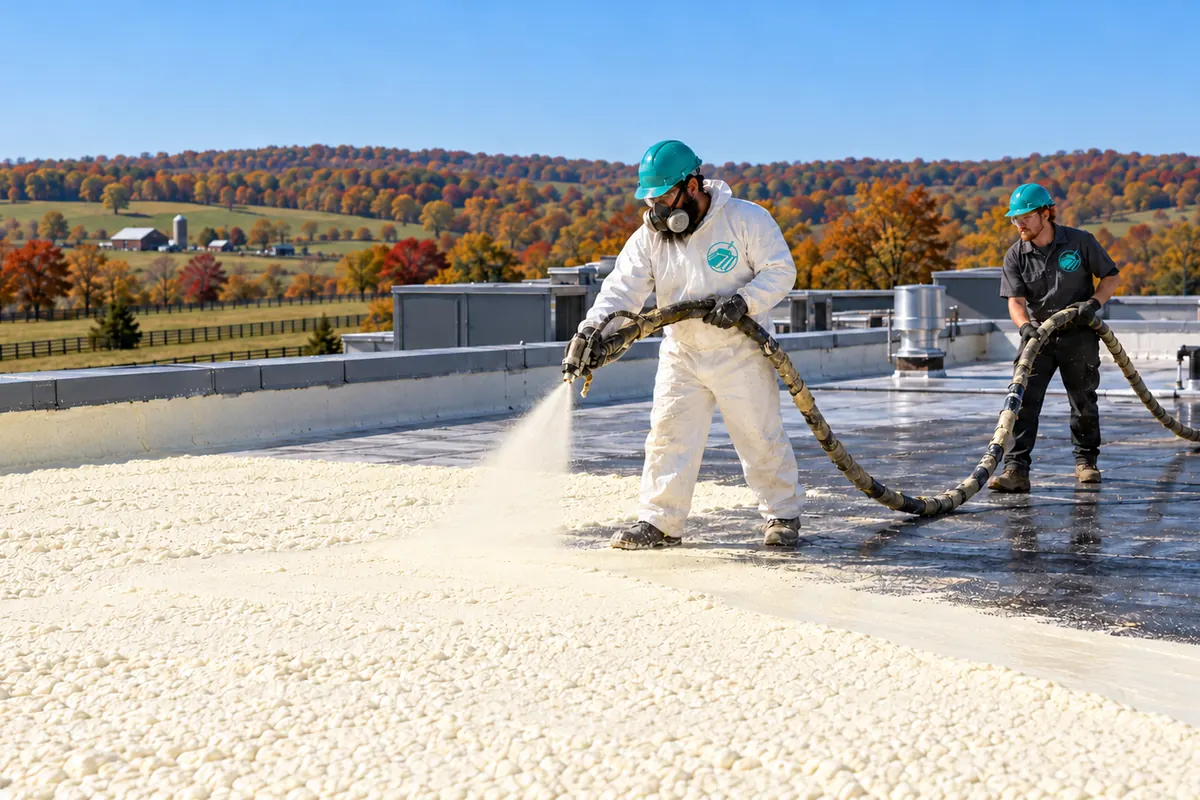
Foam does more than a coating, and it changes more of the roof. These cards show when that trade is worth it.
Condensation forms under bare panels, and foam on top keeps the steel warmer so less water forms below.
One continuous foam layer buries the fasteners and overlaps instead of sealing each one separately.
When insulation adds little, a coating seals the details for less money and less edge work.
Foam needs clean, dry, firm steel underneath, so damaged panels and soaked material come out first.
Foam is chosen for problems that a thin coating leaves behind. These are the ones owners bring to us.
Humid indoor air meets the cold panel underside and turns to water, which drips like a leak.
Spray foam over the panels to warm the steel, then coat the foam to shield it from sun.
Bare metal roofs carry little insulation, so heat escapes straight through the panels.
Add closed-cell foam on top, which the DOE guide puts at about R-6 per inch.
Washers across the whole roof have aged out together, and spot sealing never catches up.
Treat the screws, then cover the entire field in one foam layer and a top coat.
Older eave trim and gutters sit too low once the roof surface rises with foam.
Rebuild the edge details to the new roof height as part of the foam job.
Foam jobs differ mostly in thickness and in the top coat. Here are the combinations used over metal.
Pitched metal buildings that drain fast take an acrylic top coat over the foam, which stays bright and recoats easily.
Shallow roofs where water lingers get a silicone top coat, which handles standing water over the foam surface.
Buildings heated through winter take more inches of foam, and the roof edge, wall flashing, and gutters are planned around that height.
Foam brings insulation along with leak sealing. These gains depend on clean, dry, primed panels underneath.
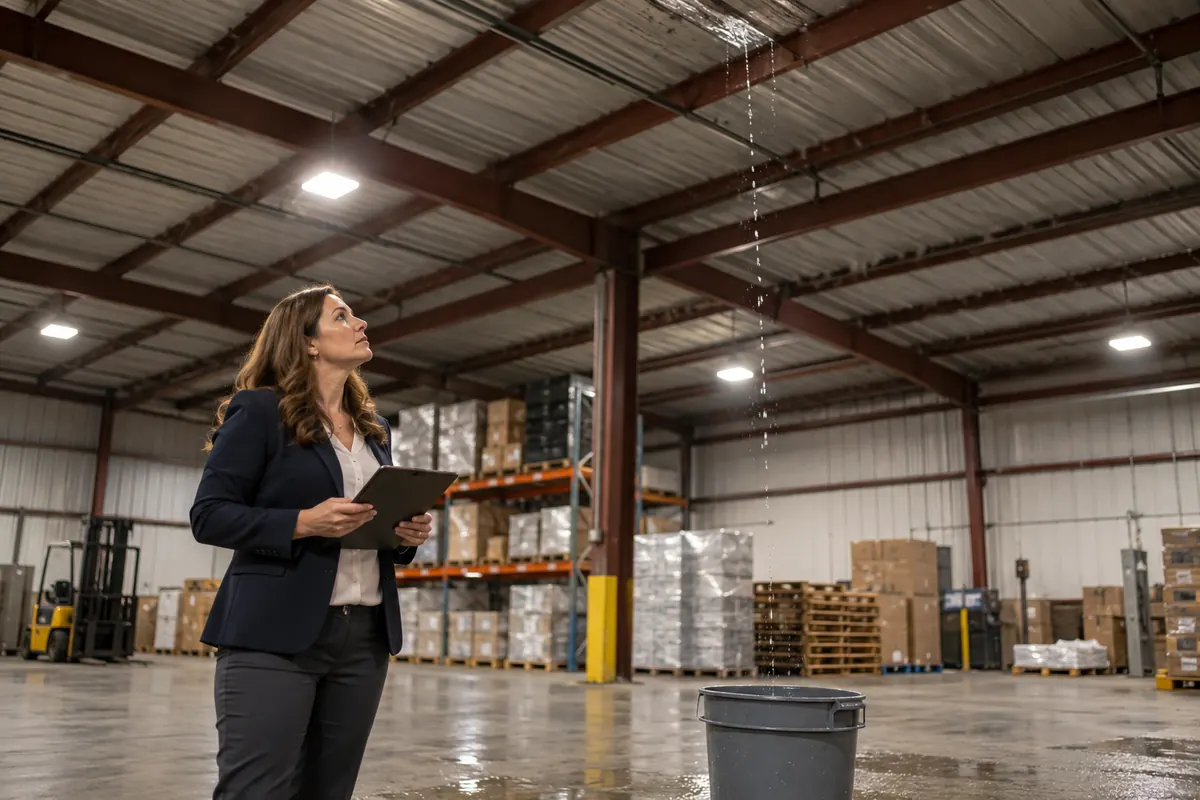
Closed-cell foam runs about R-6 per inch according to the DOE Building America guide. Sprayed over the panels, it insulates the roof and seals every screw, lap, and ridge cap at the same time, then a top coat protects it from sun.
Warmer steel means less water forms on the panel underside on cold mornings, which protects stock and racking under the roof.
Screws and washers end up under foam, so the hundreds of separate leak points on an R-panel roof stop mattering.
Upkeep means recoating the top coat over time, while the foam underneath stays on the roof.
Call and describe when the water shows up. Clear-morning drips with no rain point to condensation, and foam over the panels addresses that.
Foam sticks only to clean, dry, primed steel. This is the order we follow from walk-through to top coat.
We check panel strength, rust, and the screw rows, then look inside for wet insulation and drip patterns. Wall flashing heights are measured, since foam will raise the roof surface.
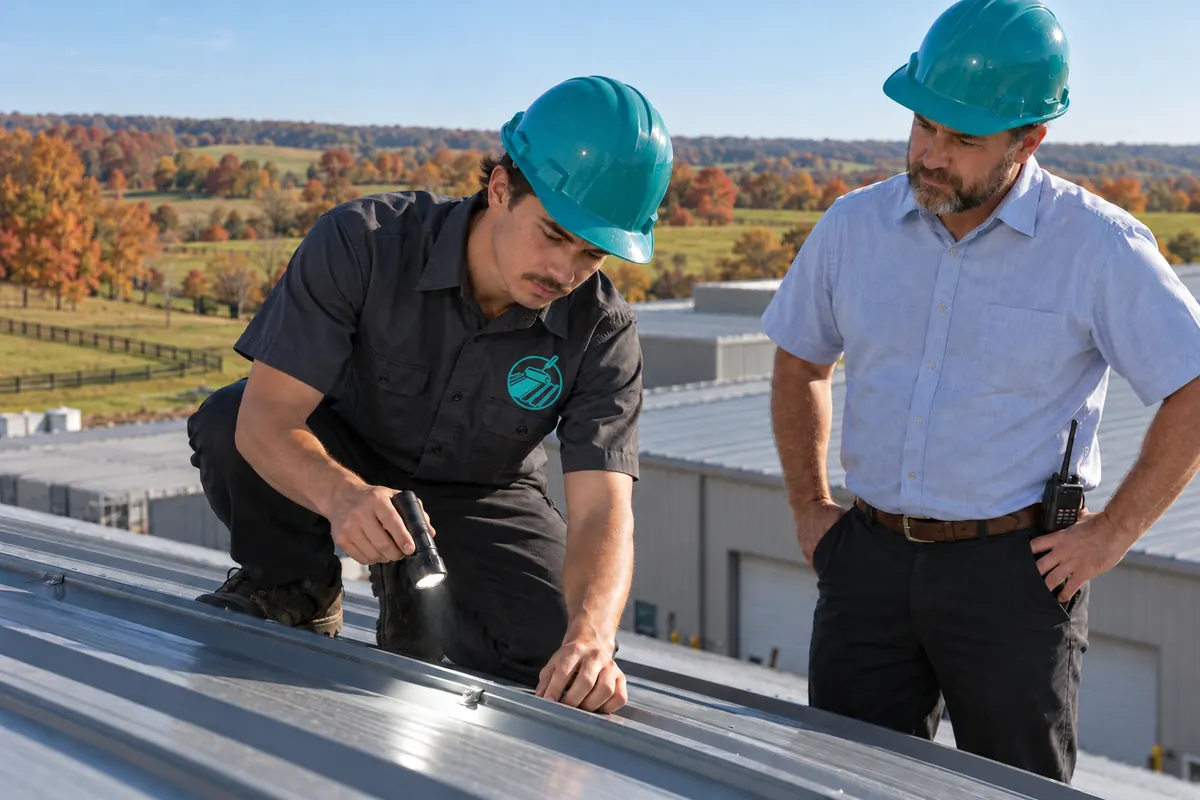
Panels are pressure washed, loose rust is removed, and primer goes on rusted steel. Foam waits until the panels are fully dry.
Rooftop unit intakes are shut down or covered, nearby cars are moved, and masking goes over skylights, vents, and walls to control overspray.
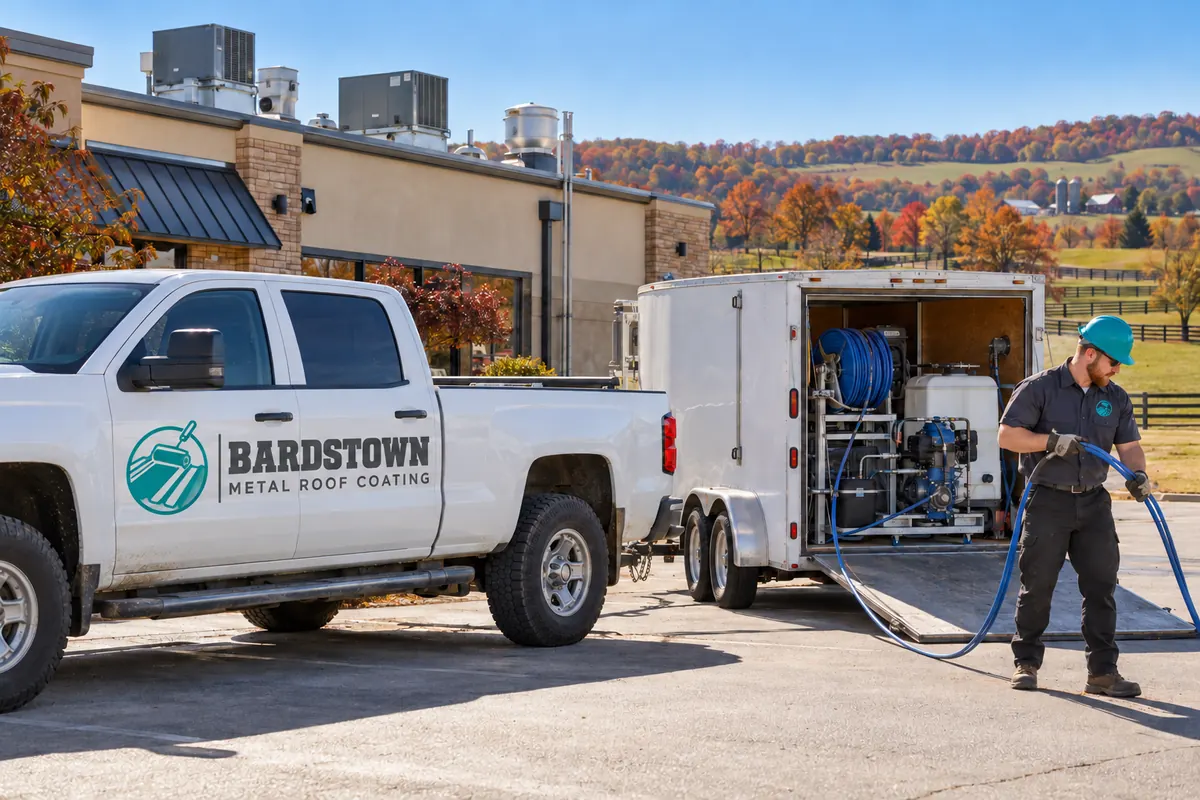
Foam is built up in passes to the planned thickness, filling the panel ribs and burying screws, laps, and ridge caps.
An acrylic or silicone top coat goes over the cured foam at the product-sheet thickness, with granules on walk paths.
Not every building needs insulation added. These coatings seal the roof without raising it.
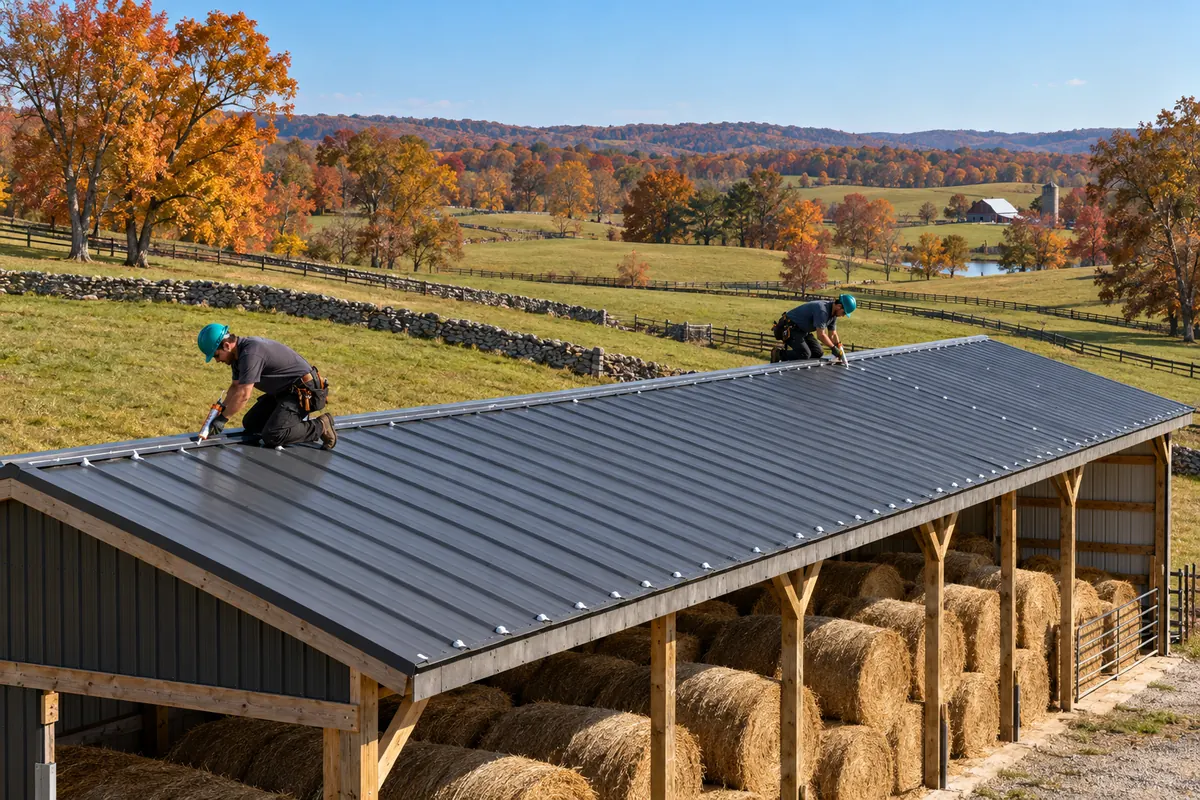
Roofs where leaks and rust are the main problem get fastener and lap work plus a coating.
Metal roof coating in Bardstown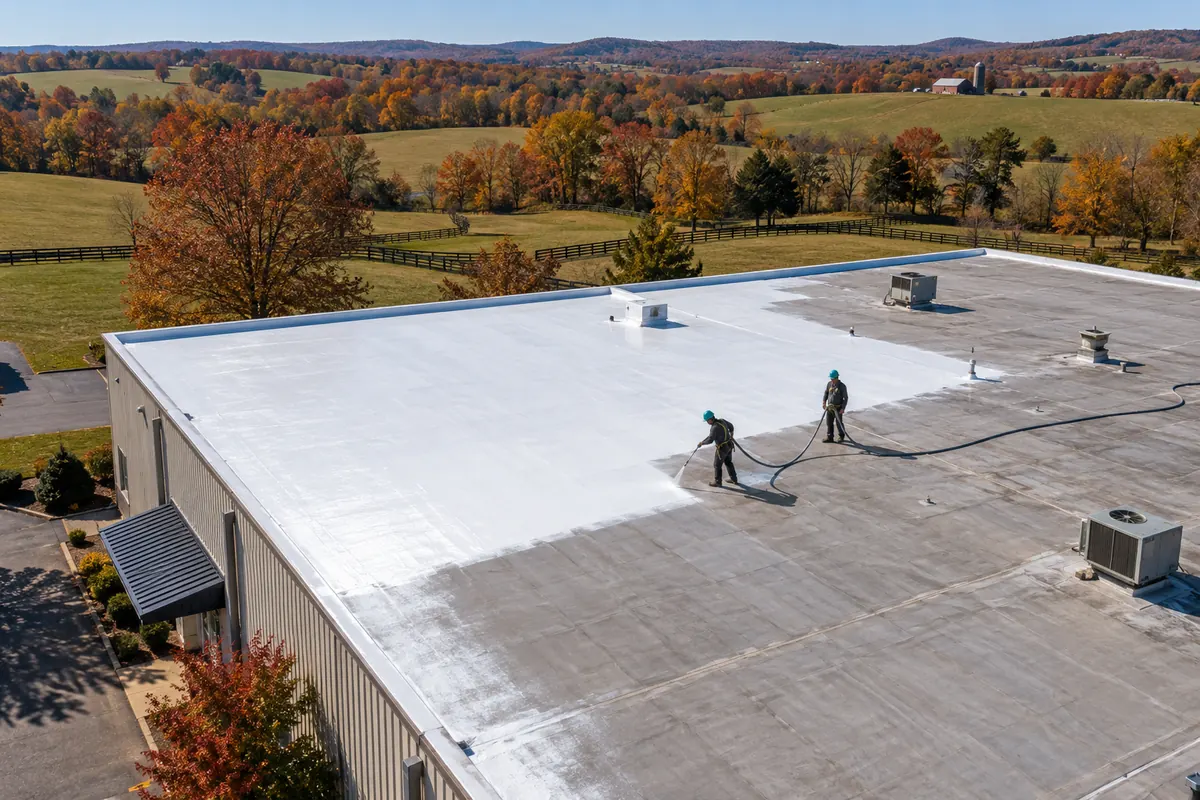
Low-slope roofs with standing water take silicone directly over primed metal.
Silicone coating details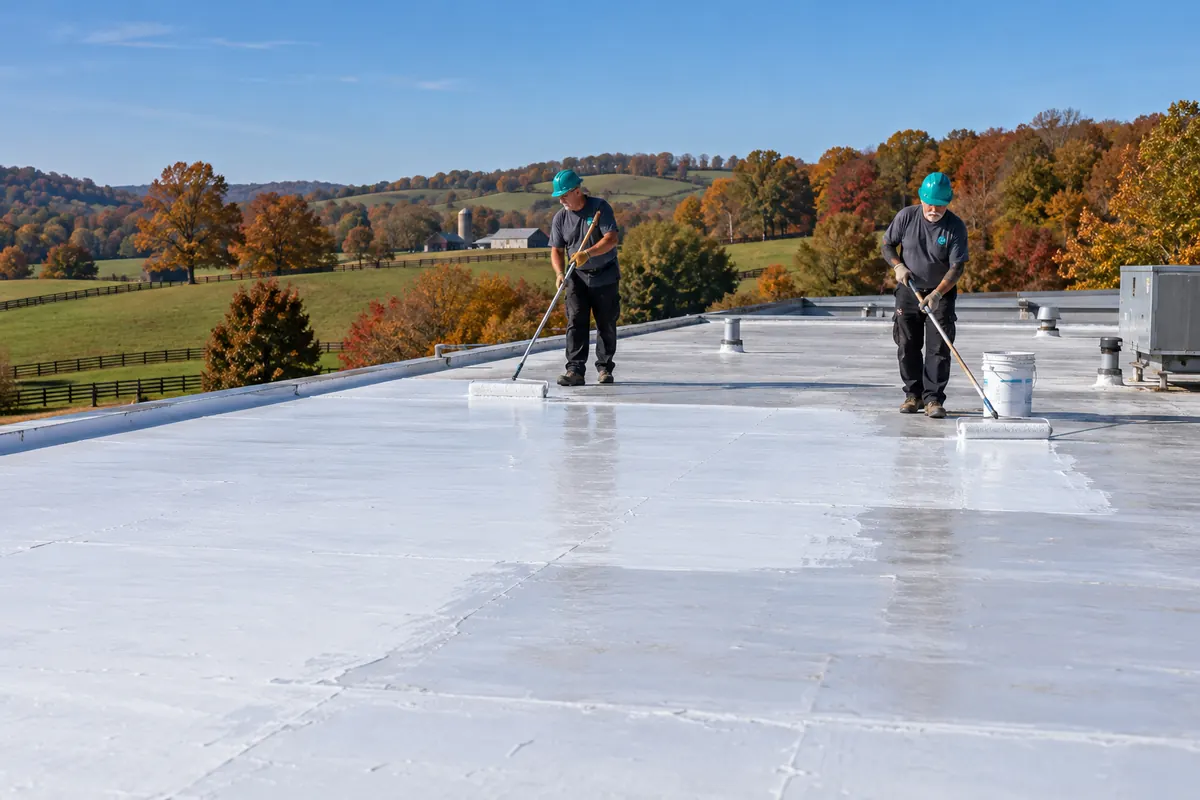
Steeper roofs that drain quickly can go straight to acrylic over primer.
Acrylic coating detailsThe chip on each row is the short answer. Open it for the rest.
Foam adds insulation and seals the roof in one layer, while a coating seals and reflects without adding insulation. Buildings that drip condensation or cost a lot to heat lean toward foam. Buildings where leaks and rust are the main problem lean toward coating. Foam raises the roof surface and changes the edge trim; both need clean, primed panels first.
Warm, humid indoor air meets the cold underside of the panels and turns to water. Look for spots spread across the ceiling, dripping on clear cold mornings with no rain, and wet or rusty fastener tips inside. A coating keeps rain out but does little for condensation. Foam on top, insulation underneath, or better ventilation addresses it.
No program can be counted on ahead of time, so ask the provider on your bill first. The City of Bardstown supplies electric service to commercial customers on its system, and rural co-ops serve much of the countryside. Ask whether foam insulation counts, whether approval comes before work, and keep product data and before photos.
Thickness is planned around insulation goals and what the roof edges can take. Ribs get filled first, then foam builds in passes to the planned depth above the rib tops. Each added inch raises the edge, so wall flashing, gutters, and trim are measured during the inspection.
Nelson County Code Enforcement is the office to call, since foam changes the roof assembly more than a coating does. Describe the work plainly before scheduling, and have the address, building use, roof area, panel type, and planned foam thickness ready. Larger projects can also need state plan review.
Send the roof size and tell us about winter heating, and we will price foam over the panels.
Leave a name and number and we will call you back about your metal roof.
Or call now: (502) 289-9569