If Your Roof
Has Chalky Paint And A Few Small Leaks
Panels stay firm and the steel is intact, so light cleaning and a primer test lead straight into coating.
Start WithA Full Coating
Commercial Metal Roofs · Nelson County, KY
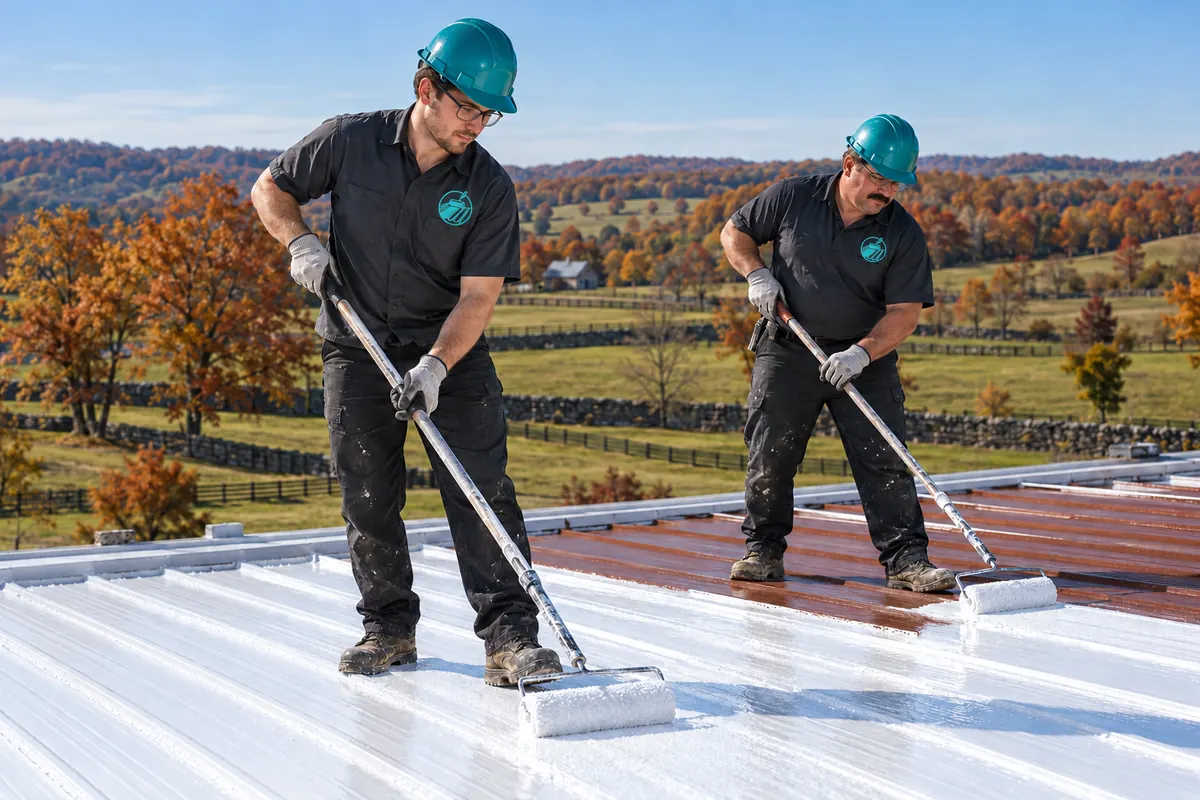
We coat commercial metal roofs around Bardstown. Each metal roof coating job starts with the screws, laps, and rust behind most leaks, then seals the panels in one continuous coat.
The amount of rust-through and loose metal sets the path for a commercial metal roof. Find the card that matches what you see from the roof and from inside.
Panels stay firm and the steel is intact, so light cleaning and a primer test lead straight into coating.
Fastener rows, laps, and rusted spots get treated first, then the whole field is coated as one membrane.
Holed sheets come out and matching panels go in, and the rest of the roof is prepped and coated.
Framing damage and widespread rust-through leave nothing solid to coat over, so we tell you plainly.
Prep takes longer than coating on most metal roofs, and it decides how long the coat holds. Here is the order of work.
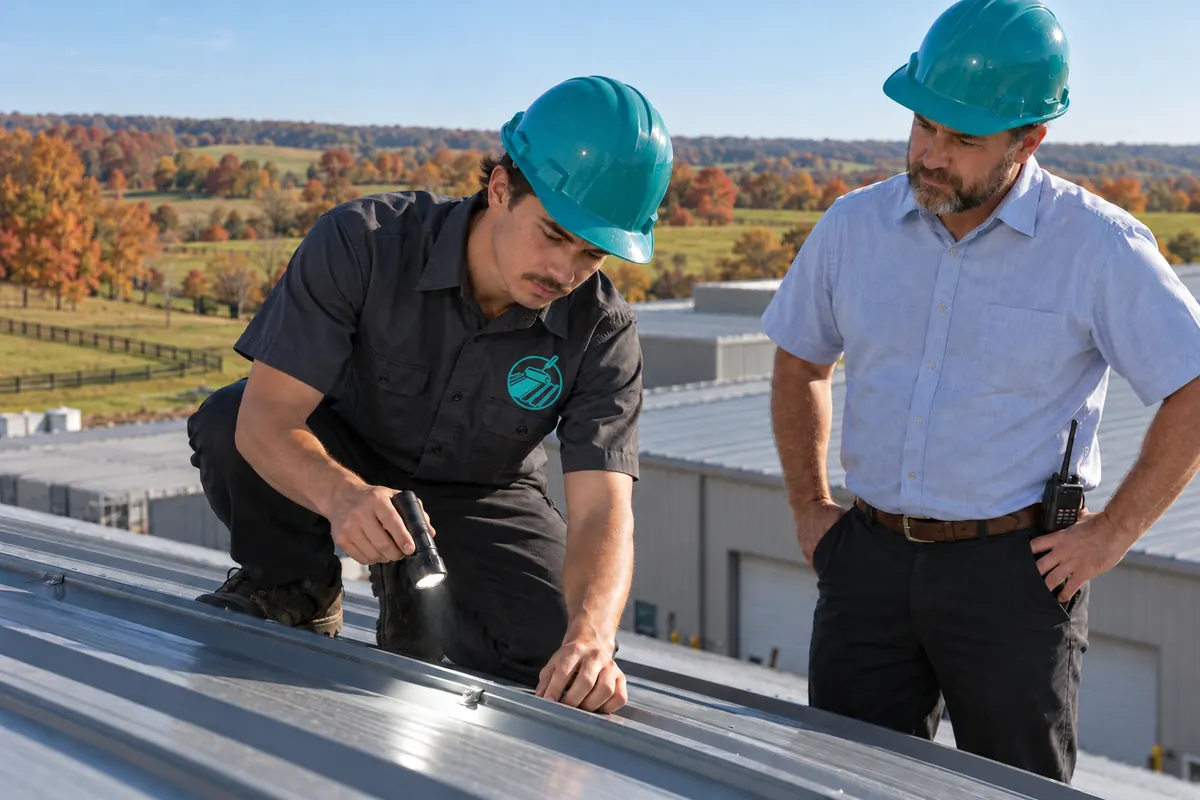
A crew member walks the fastener rows, side laps, end laps, ridge caps, and gutters, then looks at the panel undersides from inside. A small adhesion patch on the old finish shows whether coating will bond.
Pressure washing clears chalk, oil, and dirt from panels, laps, and gutters. Flaking scale at laps and screw heads comes off with wire brushes or grinders so primer reaches firm steel.
Loose screws are tightened, stripped ones are replaced one size up, and each head is capped. Laps, ridge caps, and pipe boots get mastic or seam tape with reinforcing fabric.
Rust-inhibiting primer goes on red-rust areas and on any panels the coating maker requires. Galvanized panels with white rust get the primer listed for that surface.
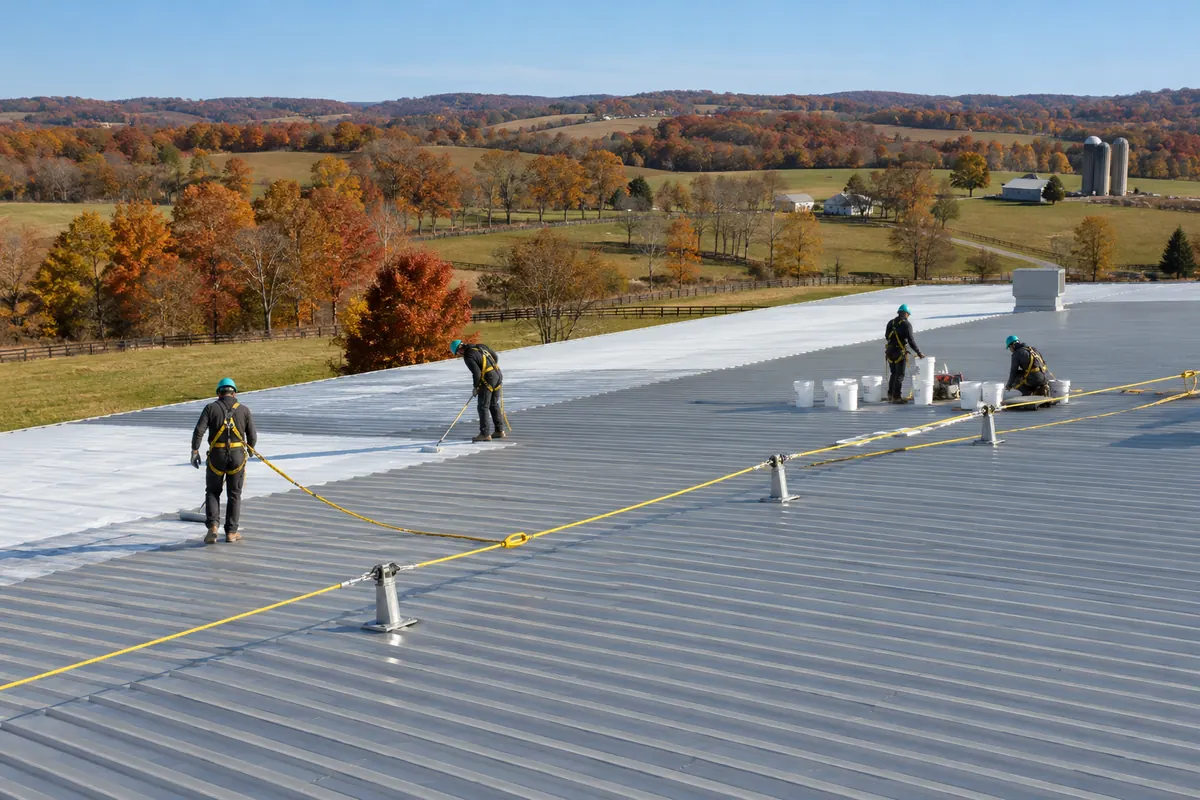
Coats go on by roller or spray in dry weather, section by section, with laps and fasteners sealed before each day ends so a rain delay leaves no open seams.
Metal coating is our main work, and we also apply silicone, acrylic, spray foam, and shingle roof coatings. Each system goes on only when the roof is ready for it.
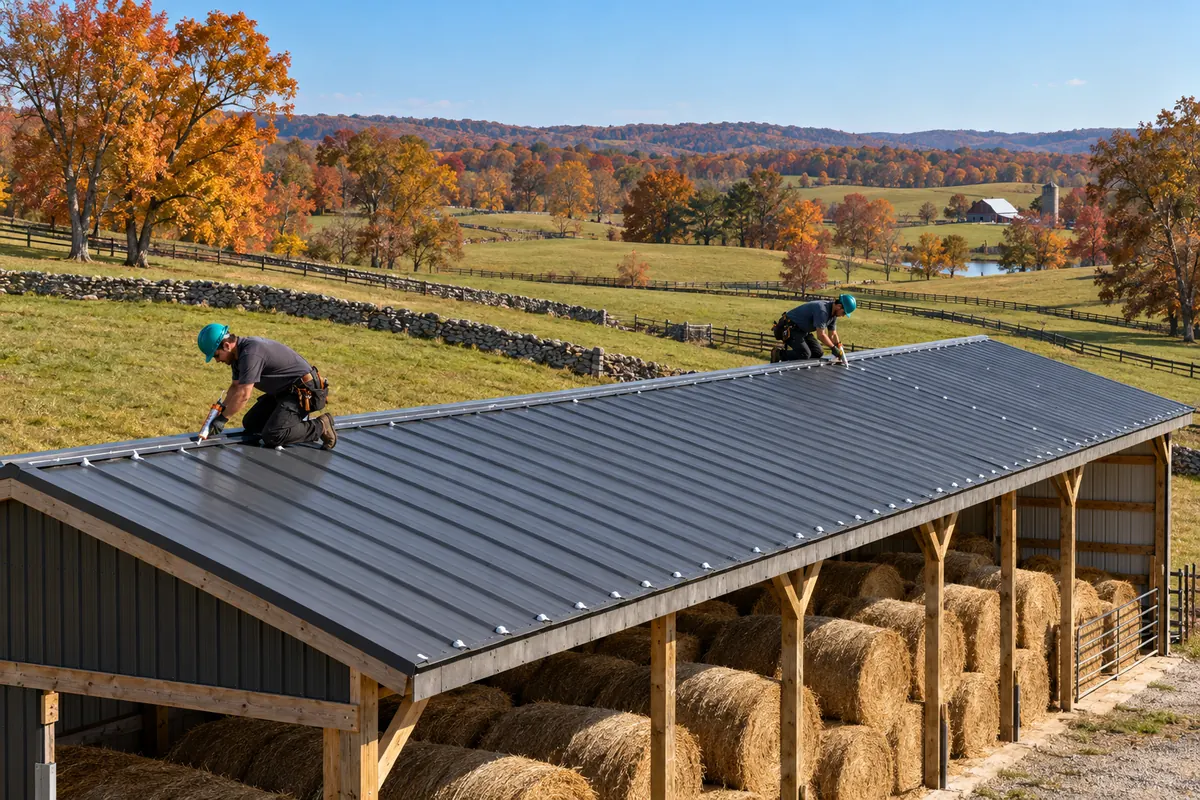
For exposed-fastener R-panel and standing seam roofs on warehouses, shops, and equipment buildings where leaks trace to screws, laps, or ridge caps and the panels stay firm.
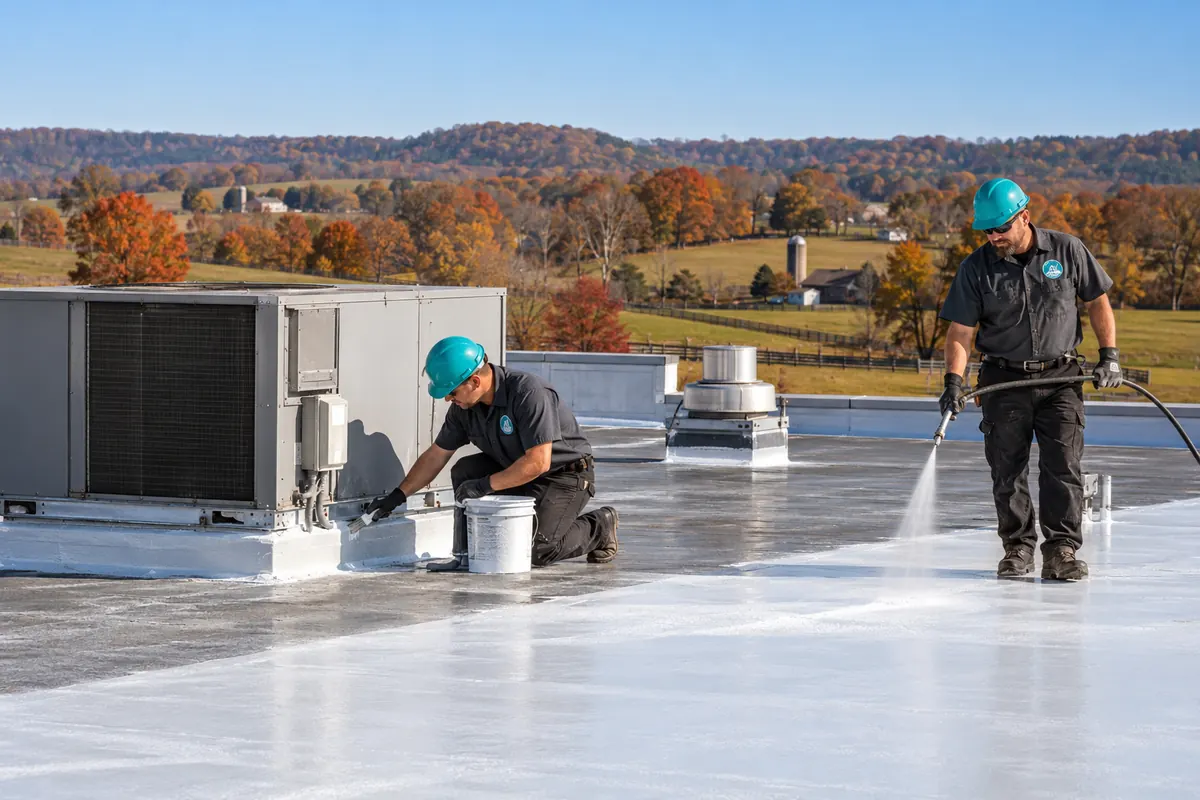
Holds up where water lingers on low-slope metal, at end laps, gutters, and behind rooftop units. Later recoats need silicone again, so we plan for that from the start.
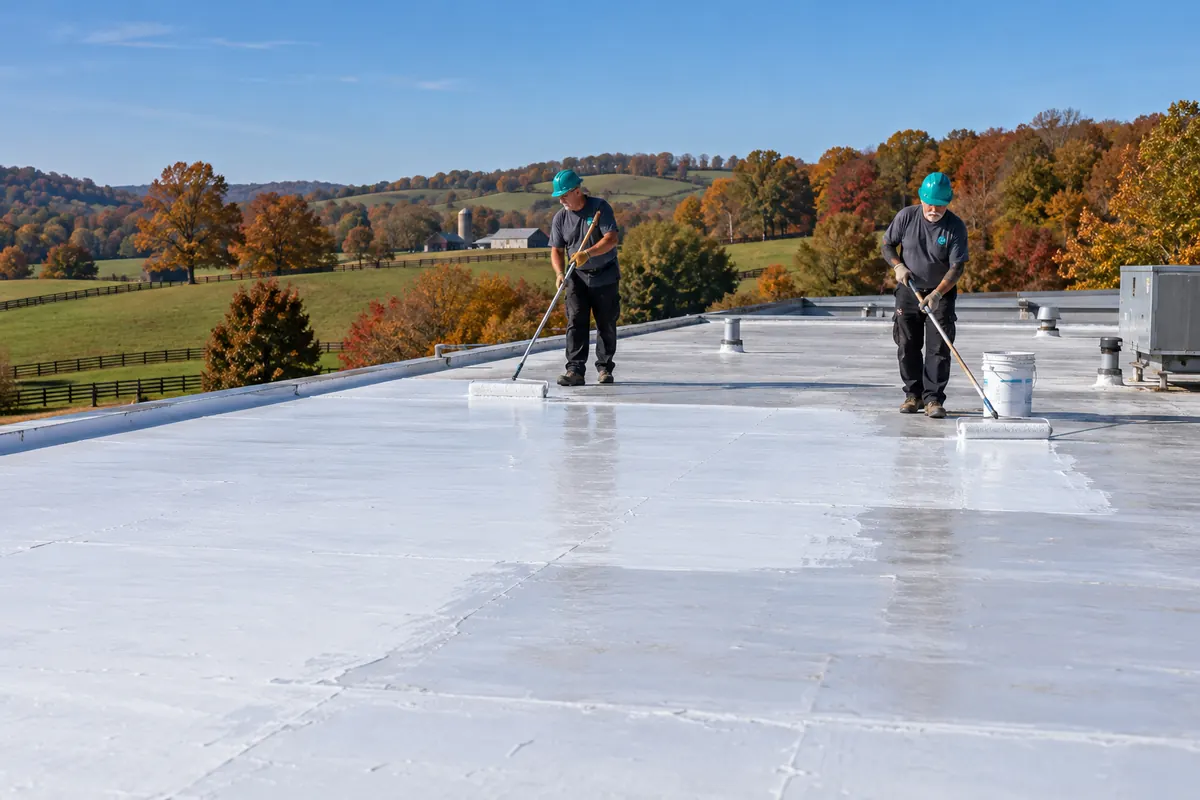
Water-based acrylic fits pitched metal roofs that shed rain within hours. It stays bright, resists dirt pickup, and accepts many coatings at the next recoat.
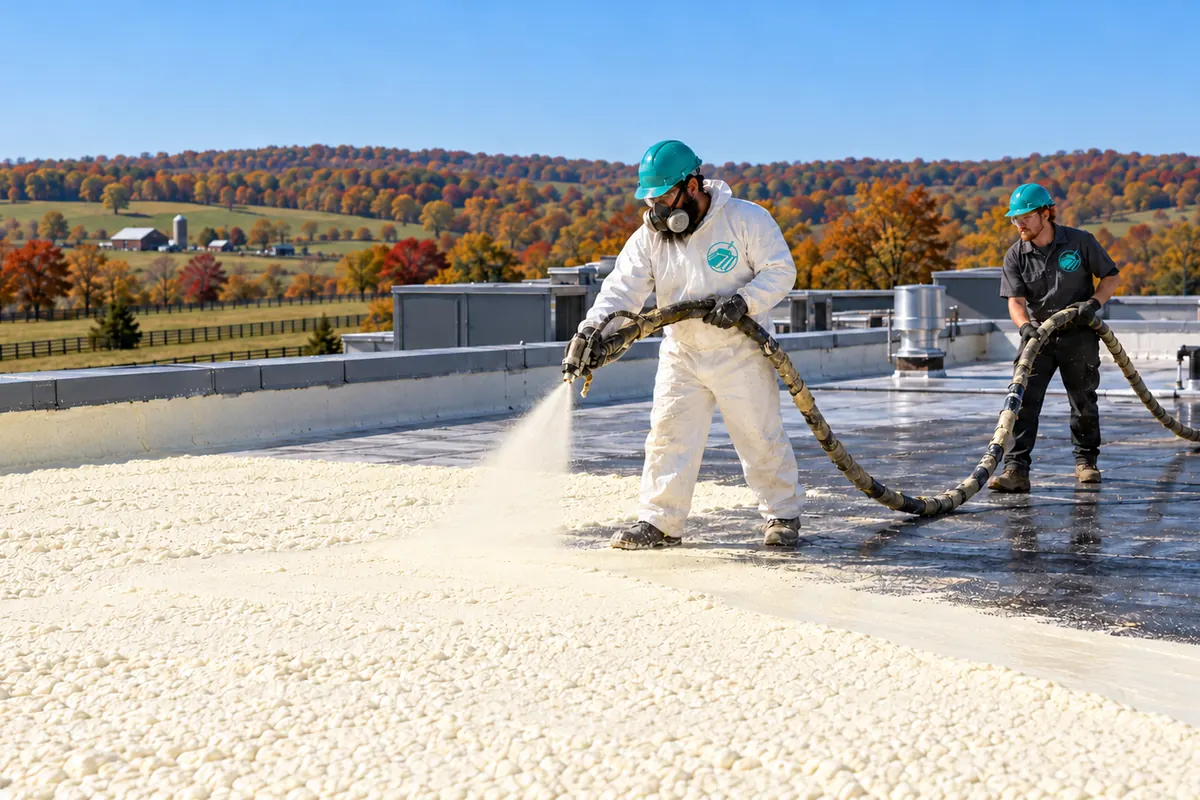
Closed-cell foam sprayed over the panels adds insulation and covers screws, laps, and ridge caps in one layer, then takes a protective top coat.
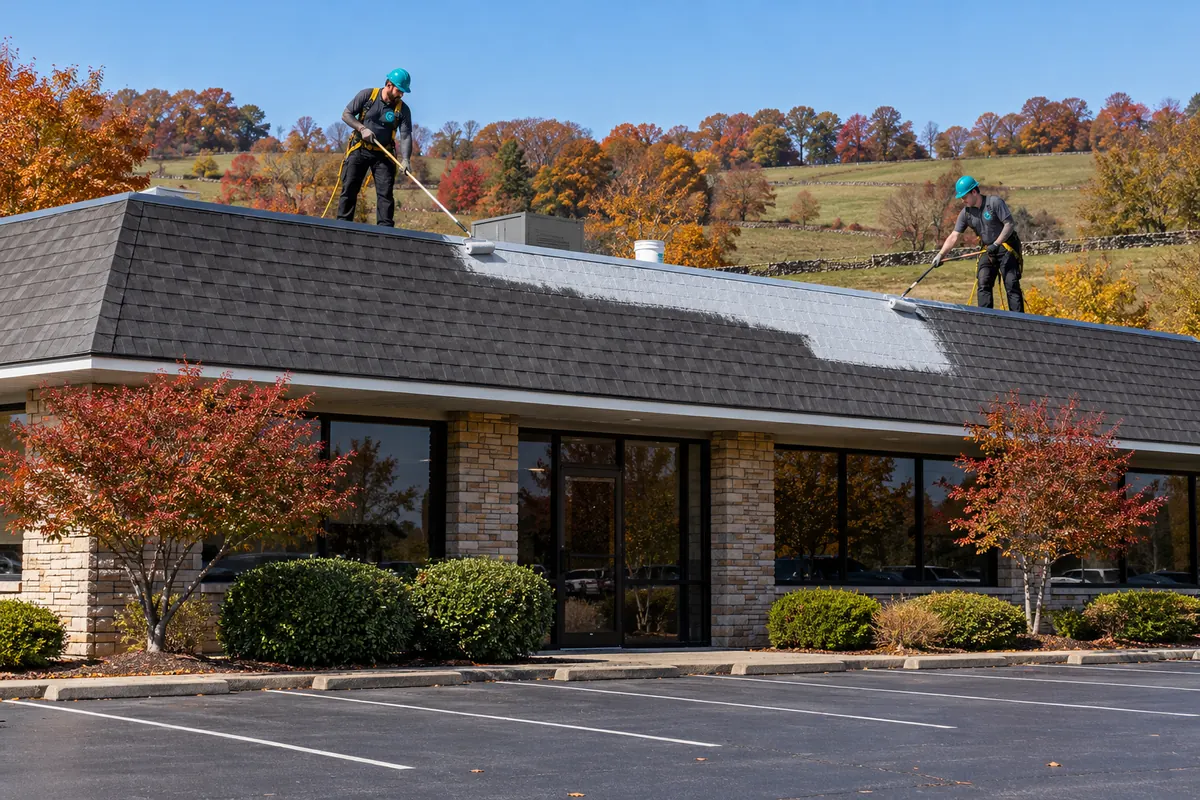
Some shingled strip centers, offices, and churches can take a coating when the shingles lie flat, keep their granules, and the shingle maker allows it.
Call and tell us where the drip lands inside and which panel run sits above it. That narrows the leak to a lap or fastener line before anyone climbs up.
These are gains owners can check on their own roof once the coating has cured. Each one depends on prep done right.
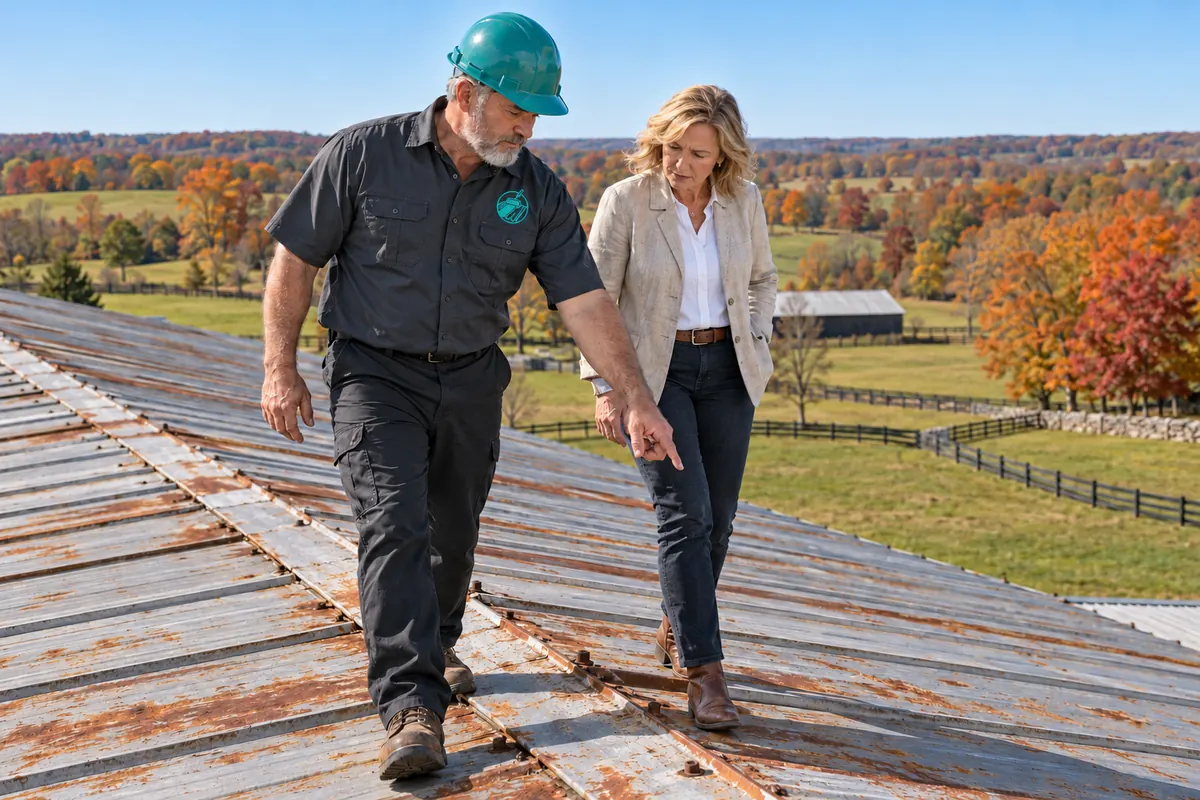
Bare metal relies on every washer and lap sealant holding on its own, and those parts age at different speeds. A cured coating covers the screw heads and bridges side laps and end laps, so the roof sheds water as one surface.
Coated steel stays out of rain and morning dew, which slows fresh rust at laps and along panel ribs that used to stay wet.
A white or light top coat reflects more sunlight than faded paint or dull Galvalume, which lowers the panel temperature on summer afternoons.
Coating keeps solid panels on the building, so the job hauls away old screws and rust scale instead of dumpsters of steel sheets.
Most leaks on a commercial metal roof start at a handful of details. Here is what owners notice, what usually causes it, and how the coating job handles it.
Old neoprene washers dry out and crack, and screws back out as the panels expand and contract with each season.
Tighten or upsize every screw in the row, cap each head with sealant, then prime and coat over it.
End laps catch debris at the step, and the sealant tape inside dries out until water sits on the hidden steel.
Clean the lap, seal it with mastic or seam tape, and run reinforcing fabric across it before the base coat.
Ridge cap screws loosen and foam closure strips fail, letting wind-driven rain push in under the cap.
Replace failed closures, tighten and seal the cap screws, and coat the cap where it meets the panels.
Leaves and grit pack the gutter troughs, and loose seams or end caps let water back up behind the trim.
Clear the debris, reseal gutter seams and end caps, and refasten eave trim the wind has lifted.
Warm indoor air meets the cold underside of the panels and condenses, so the water comes from inside the building.
Point you to spray foam over the panels, insulation below, or better ventilation, since a coating keeps out rain only.
We coat commercial metal roofs in Bardstown, Lebanon, Springfield, and Taylorsville. If your building sits outside those towns, call us or send us a message and we will tell you whether we can take the job.
Marion County roofs where we check hail-dented panels for cracked coating and bent ribs before any recoat.
Washington County storefront and shop roofs where ridge caps, closure strips, and eave trim get fixed first.
Spencer County storage and shop buildings whose translucent skylight panels need sealed edges and guarding.
Each row shows the short answer. Open it for the full reply.
It lays one rubber-like film across the panels, so screw heads, side laps, and end laps stop acting as separate leak points. The film also keeps rain and dew off bare steel, which slows new rust, and a white finish reflects sunlight. It adds no strength, so loose or rusted-through panels are fixed before coating.
Washing, rust removal, screw and lap work, priming, and a test patch come first, in that order. A roof that looks clean still carries chalk and oil that block adhesion, so prep usually takes longer than the coating itself and decides how long it holds. Heavy chalking calls for a cleaner the coating maker approves.
Most businesses stay open because the work happens on top of the roof. Pressure washing and screw guns make the most noise, and water-based products keep odor low. Plan to shut down or cover rooftop unit intakes during spraying, clear parking near the walls, and keep hatch or lift access free.
IRS Publication 946 lists roofs on existing nonresidential buildings as qualified real property for Section 179, with a 2026 deduction limit of $2,560,000. Whether your coating job counts as an improvement or a repair is a tax call for your CPA. Keep invoices, before photos of the laps and screws, and the roof area.
We coat metal roofs on farm equipment buildings, hay barns, and pole buildings used by a business, along with warehouses and shops. Open-sided buildings get extra attention at eave trim and ridge caps, where wind gets underneath. Gutters on these buildings often hold leaves from nearby trees, so they get cleared and resealed first.
Send the roof size and condition for a free ballpark figure, or call and talk it through.
Leave a name and number and we will call you back about your metal roof.
Or call now: (502) 289-9569