If Your Roof
Has Flat Shingles With Tabs Still Sealed Down
Granules remain and the decking feels firm, so cleaning and a coating can extend the roof.
Start WithShingle Roof Coating

Shingled Commercial Buildings
Shingle roof coating in Bardstown for commercial buildings whose asphalt shingles still lie flat and hold their granules. We check the shingle maker paperwork before any work.
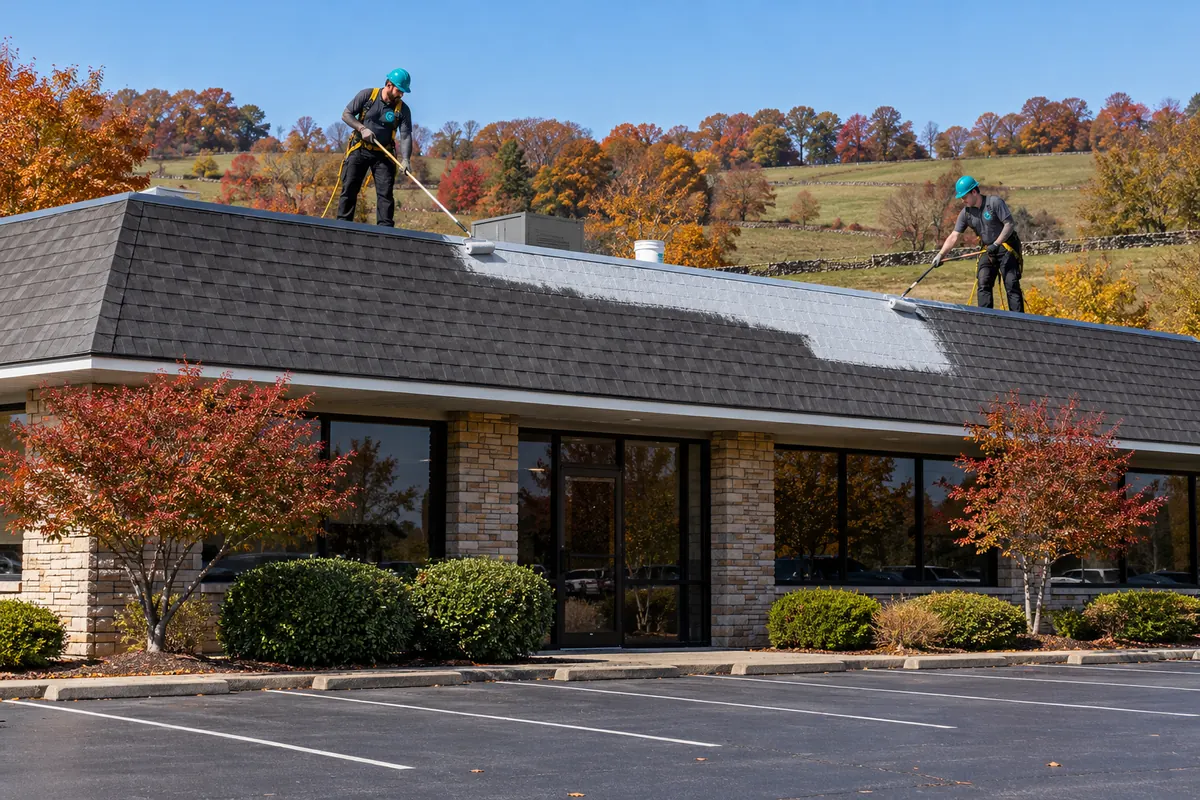
Shingle coating has a narrow gate. These cards show which shingled roofs pass it and which go another way.
Granules remain and the decking feels firm, so cleaning and a coating can extend the roof.
Both roof types get inspected together, and each takes the system that suits it.
Color and sheen change the street view, so the Historic Review Board weighs in before work.
Lifted tabs and soft decking leave nothing for coating to hold, so the roof gets replaced.
The shingles decide everything on this service. These rows show what we look for and what each finding means.
Age and runoff strip the granule layer, which leaves the asphalt open to sun.
Coat when granule loss is light; plan replacement when the mat shows widely.
The sealant strips under the tabs have let go, and wind can now peel shingles off.
Reseal loose tabs in small areas, or replace sections when many tabs lift.
Flashing at valleys, walls, and pipes usually fails before the shingles do.
Repair the flashing and seal pipe boots before anything else on the roof.
Some shingle makers drop coverage once a coating goes on, which matters if the roof is young.
Read the original paperwork with you before any work is scheduled.
Shingle coatings come in a few types. Roof age, the maker position, and the look you want decide among them.
A water-based coating rolled or sprayed over cleaned shingles, chosen for its range of colors that keep the roof looking like shingles from the lot.
Some silicone products are made for shingles and soak into the asphalt, helping it stay flexible on roofs with light granule loss.
Mixed buildings sometimes keep their steep shingles as they are and coat only the low-slope or metal sections beside them.
These gains are limited to shingles that pass the inspection gate. Curled or soft roofs need replacing instead.
A coating over flat, sealed shingles slows granule loss and drying, which can push a full tear-off further out. Owners use that time to budget for replacement instead of facing it after a leak.
Coating keeps the existing layer on the roof deck, so the job produces far less waste than a tear-off.
Quieter roof work than a tear-off helps churches and offices keep doors open during the job.
A fresh, even color over faded shingles improves how a storefront roof looks to customers pulling in.
Call before the next storm. A quick look at the tabs and decking tells us whether coating or replacement is the honest answer.
Every shingle job starts with paperwork and a close look at the tabs. This is how it runs from there.
We check the tabs, granules, and decking underfoot, look at valleys and wall flashing, and note any soft spots. Inside, stained ceilings show where water has reached.
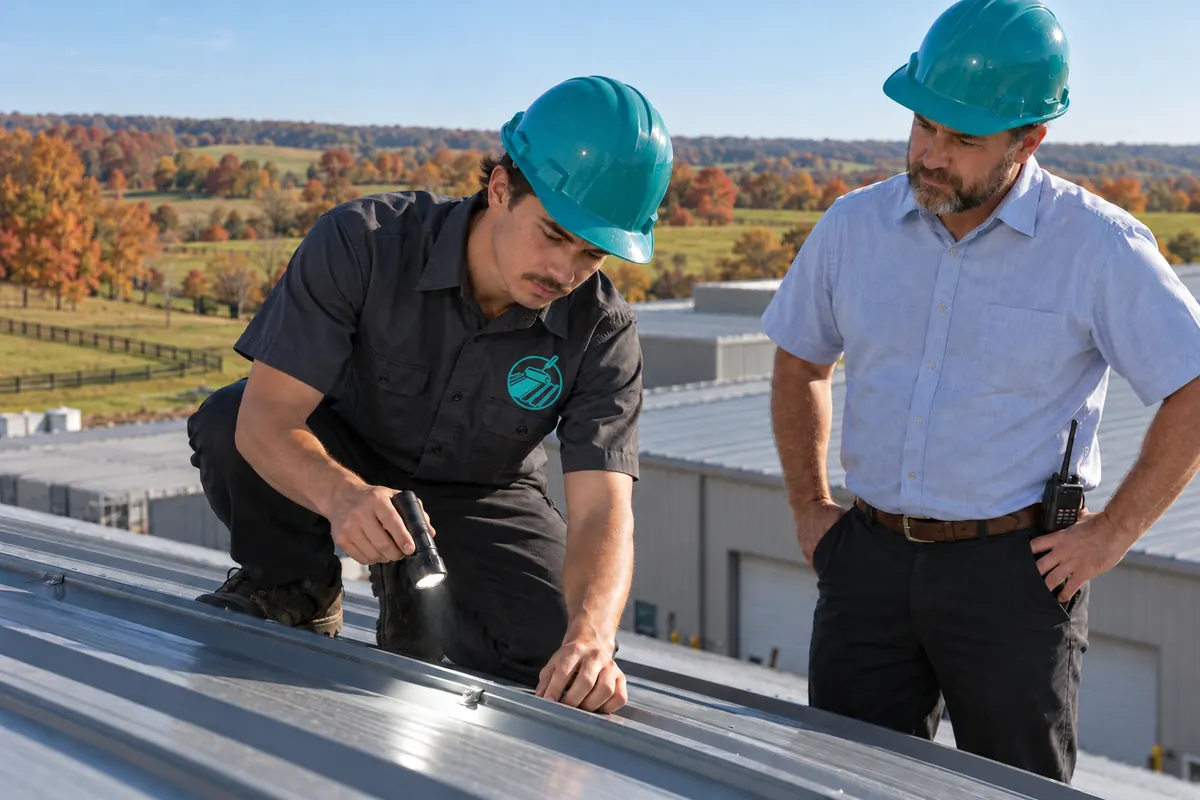
The original shingle paperwork gets read for coating limits, and the local code office is asked what the work needs. Historic district roofs go to the review board.
A low-pressure wash removes dirt and loose granules, and loose tabs, failed flashing, and pipe boots are fixed.
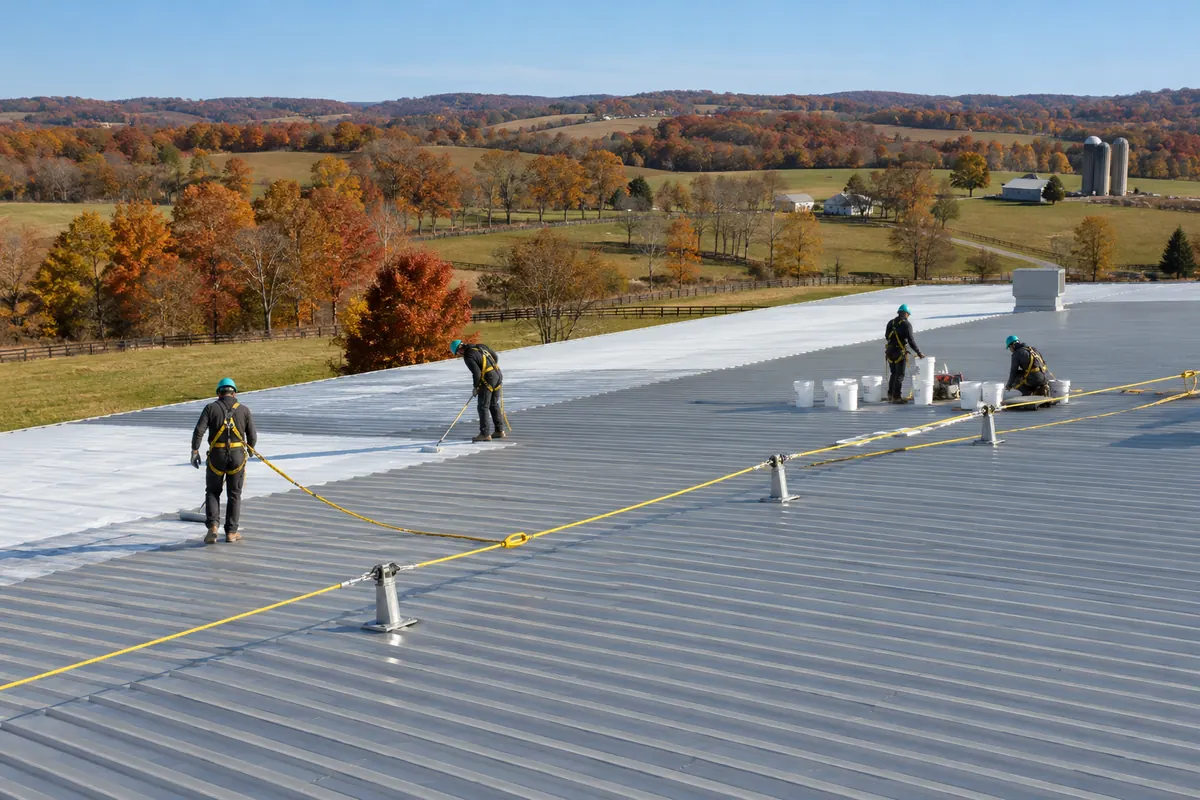
Some products call for a primer over shingles. Crews follow the product sheet for the brand chosen.
The coating goes on in the coverage rate the maker lists, with care at ridges, valleys, and edges so the shingle shape stays visible.
Many shingled buildings sit beside metal or low-slope roofs. These services cover those.
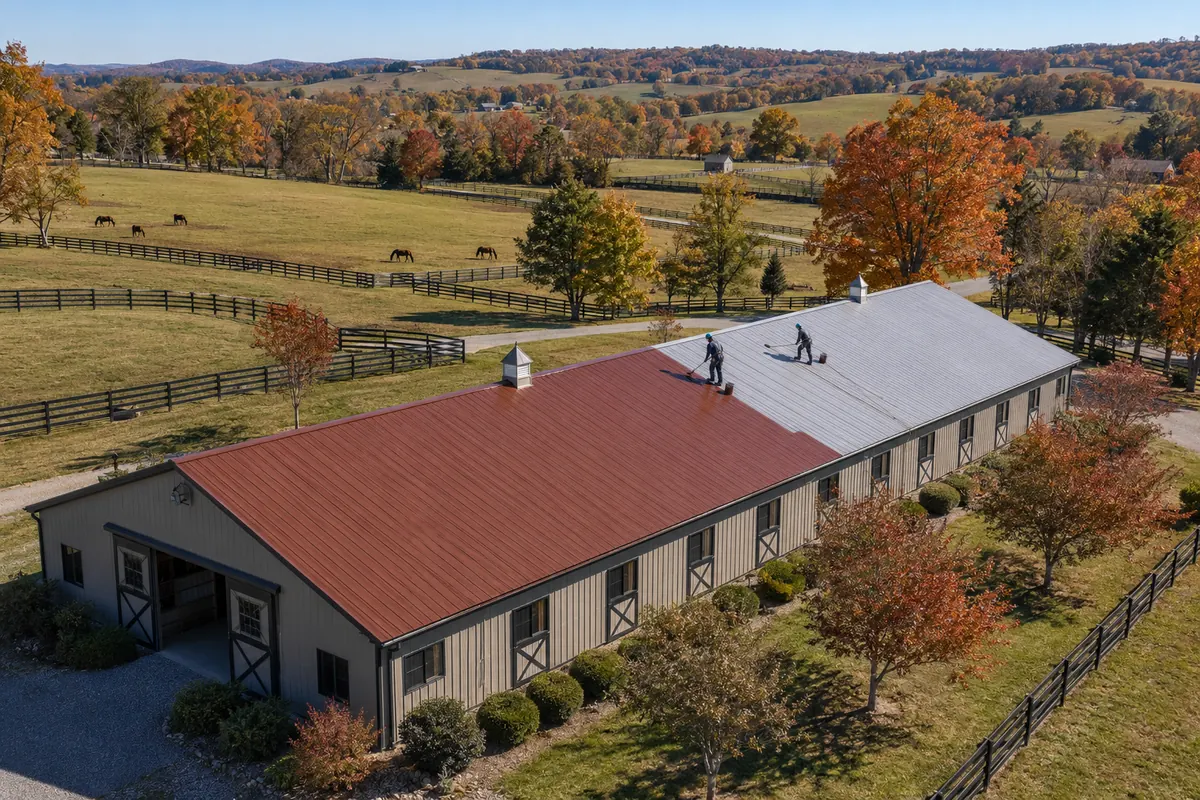
Metal outbuildings and additions get rust, screw, and lap work before their coating.
Metal roof coating in Bardstown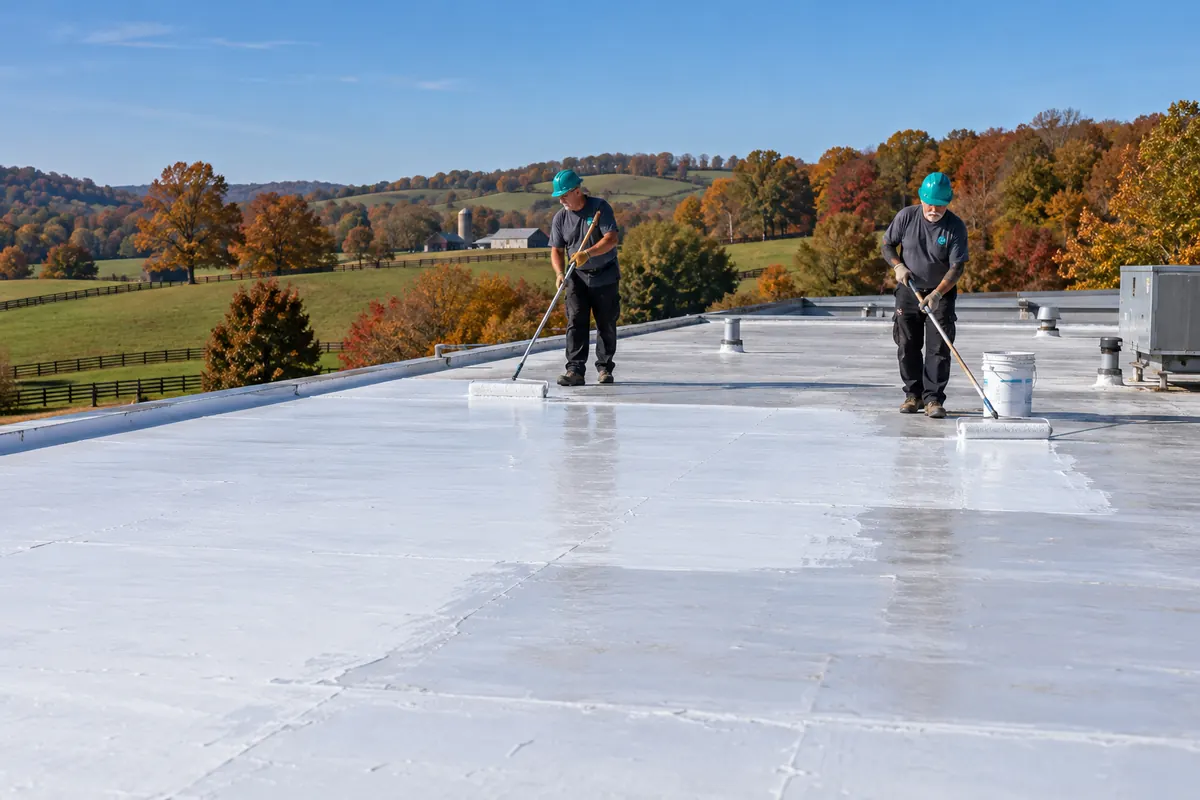
Pitched metal sections that drain well suit a bright acrylic finish.
Acrylic coating details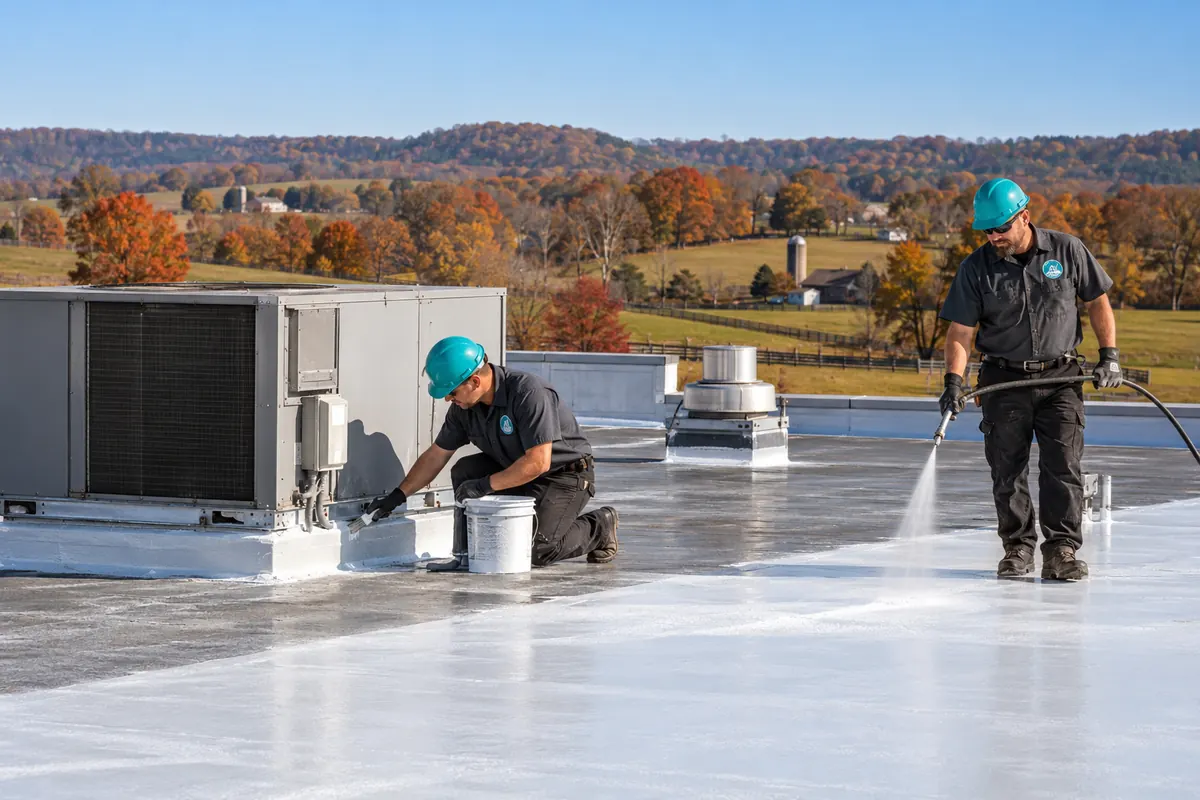
Low-slope sections with rooftop units and standing water take silicone.
Silicone coating detailsShort answers show on each row. Open any row for the full answer.
Some shingle roofs on strip centers, offices, and churches can take a coating when the shingles lie flat with sealed tabs, keep most of their granules, and sit on firm decking. Curled, cupped, or missing shingles and soft decking point to replacement. Some shingle makers drop coverage once a coating goes on, so the paperwork gets checked first.
Walk the roof each spring and fall and keep dated photos. Look for chalking that rubs off on a hand, thin spots, cracks after hail, peeling at edges, and debris in gutters and valleys. Clear gutters after leaf drop, fix small cracks with the same coating family, and plan a recoat when thin spots spread.
Exterior changes inside the district need Historic Review Board approval, according to the city. The board votes, the City Council considers it, and the owner receives a Certificate of Appropriateness by mail. Roofs visible from the street matter most, since coating changes color and sheen. Bring color samples and sidewalk photos to the preservation office.
A coating follows the shingle shape, so water still runs down each course the way it did before. Crews keep material out of the gaps between tabs at the right rate to avoid sealing laps shut. Valleys and flashing get repaired first, because coating over a failed valley only hides the leak path.
Condition matters more than the date on the invoice. A fifteen-year-old roof with flat tabs and good granules can pass, while a younger roof with curling from poor ventilation can fail. We judge it on the roof, tab by tab, and say so plainly when replacement is the better spend.
Tell us about the building and its shingles, and we will set up a roof walk.
Leave a name and number and we will call you back about your metal roof.
Or call now: (502) 289-9569